
Get trending papers in your email inbox once a day!
Get trending papers in your email inbox!
Subscribe



InteractiveOmni: A Unified Omni-modal Model for Audio-Visual Multi-turn Dialogue
We introduce InteractiveOmni, a unified and open-source omni-modal large language model for audio-visual multi-turn interaction, ranging from 4B to 8B parameters, designed to lead the field of lightweight models by offering comprehensive omni-modal understanding and speech generation capabilities. To achieve this, we integrate the vision encoder, audio encoder, large language model, and speech decoder into a unified model for understanding and generation tasks. We design a multi-stage training strategy to ensure robust cross-modal capabilities, including pre-training for omni-modal understanding, followed by post-training with speech conversation and audio-visual interaction. To enable human-like long-term conversational ability, we meticulously curate a multi-turn training dataset that enhances the model's ability to handle complex and multi-turn interactions. To effectively evaluate the multi-turn memory and speech interaction capabilities, we construct the multi-modal multi-turn memory benchmark and the multi-turn speech interaction benchmark. Experiments demonstrate that InteractiveOmni significantly outperforms leading open-source models and provides a more intelligent multi-turn audio-visual experience, particularly in its long-term memory capabilities. Notably, InteractiveOmni-4B is comparable to the much larger model like Qwen2.5-Omni-7B on general benchmarks, and it can retain 97% of the performance of the InteractiveOmni-8B while utilizing only 50% of the model size. Achieving state-of-the-art results against similarly sized models across image, audio, video understanding, and speech generation tasks, InteractiveOmni is an accessible, open-source foundation for next-generation intelligent interactive systems.


PreFLMR: Scaling Up Fine-Grained Late-Interaction Multi-modal Retrievers
Large Multimodal Models (LMMs) excel in natural language and visual understanding but are challenged by exacting tasks such as Knowledge-based Visual Question Answering (KB-VQA) which involve the retrieval of relevant information from document collections to use in shaping answers to questions. We present an extensive training and evaluation framework, M2KR, for KB-VQA. M2KR contains a collection of vision and language tasks which we have incorporated into a single suite of benchmark tasks for training and evaluating general-purpose multi-modal retrievers. We use M2KR to develop PreFLMR, a pre-trained version of the recently developed Fine-grained Late-interaction Multi-modal Retriever (FLMR) approach to KB-VQA, and we report new state-of-the-art results across a range of tasks. We also present investigations into the scaling behaviors of PreFLMR intended to be useful in future developments in general-purpose multi-modal retrievers.

RealTalk-CN: A Realistic Chinese Speech-Text Dialogue Benchmark With Cross-Modal Interaction Analysis
In recent years, large language models (LLMs) have achieved remarkable advancements in multimodal processing, including end-to-end speech-based language models that enable natural interactions and perform specific tasks in task-oriented dialogue (TOD) systems. However, existing TOD datasets are predominantly text-based, lacking real speech signals that are essential for evaluating the robustness of speech-based LLMs. Moreover, existing speech TOD datasets are primarily English and lack critical aspects such as speech disfluencies and speaker variations. To address these gaps, we introduce RealTalk-CN, the first Chinese multi-turn, multi-domain speech-text dual-modal TOD dataset, comprising 5.4k dialogues (60K utterances, 150 hours) with paired speech-text annotations. RealTalk-CN captures diverse dialogue scenarios with annotated spontaneous speech disfluencies, ensuring comprehensive coverage of real-world complexities in speech dialogue. In addition, we propose a novel cross-modal chat task that authentically simulates real-world user interactions, allowing dynamic switching between speech and text modalities. Our evaluation covers robustness to speech disfluencies, sensitivity to speaker characteristics, and cross-domain performance. Extensive experiments validate the effectiveness of RealTalk-CN, establishing a strong foundation for Chinese speech-based LLMs research.


VocalBench: Benchmarking the Vocal Conversational Abilities for Speech Interaction Models
The rapid advancement of large language models (LLMs) has accelerated the development of multi-modal models capable of vocal communication. Unlike text-based interactions, speech conveys rich and diverse information, including semantic content, acoustic variations, paralanguage cues, and environmental context. However, existing evaluations of speech interaction models predominantly focus on the quality of their textual responses, often overlooking critical aspects of vocal performance and lacking benchmarks with vocal-specific test instances. To address this gap, we propose VocalBench, a comprehensive benchmark designed to evaluate speech interaction models' capabilities in vocal communication. VocalBench comprises 9,400 carefully curated instances across four key dimensions: semantic quality, acoustic performance, conversational abilities, and robustness. It covers 16 fundamental skills essential for effective vocal interaction. Experimental results reveal significant variability in current model capabilities, each exhibiting distinct strengths and weaknesses, and provide valuable insights to guide future research in speech-based interaction systems. Code and evaluation instances are available at https://github.com/SJTU-OmniAgent/VocalBench.
IWR-Bench: Can LVLMs reconstruct interactive webpage from a user interaction video?
The webpage-to-code task requires models to understand visual representations of webpages and generate corresponding code. However, existing benchmarks primarily focus on static screenshot-to-code tasks, thereby overlooking the dynamic interactions fundamental to real-world web applications. To address this limitation, this paper introduces IWR-Bench, a novel benchmark for evaluating the capabilities of Large Vision-Language Models (LVLMs) in interactive webpage reconstruction from video. IWR-Bench comprises 113 meticulously curated tasks from 100 real-world websites, with 1,001 actions and featuring diverse interaction complexities (e.g., web games), visual styles, and domains. Aligning with standard web development practices, each task includes not only user interaction videos but also all crawled static assets (e.g., images, videos). This benchmark evaluates models on two fundamental challenges: comprehensive multi-modal reasoning to infer interaction logic from video and assets, and advanced code generation to translate this logic into functional code. An agent-as-a-judge framework with a comprehensive metric system automatically assesses the functional correctness and visual fidelity of generated webpages. Extensive experiments on 28 LVLMs reveal a significant challenge: the best model achieves an overall score of only 36.35%, as functional correctness (24.39% IFS) lags significantly behind visual fidelity (64.25% VFS). These results highlight critical limitations in current models' ability to reason about temporal dynamics and synthesize event-driven logic, establishing IWR-Bench as a challenging frontier for vision-language research. The benchmark and evaluation code will be made publicly available. Code is available at https://github.com/L-O-I/IWR-Bench.

Step-Audio: Unified Understanding and Generation in Intelligent Speech Interaction
Real-time speech interaction, serving as a fundamental interface for human-machine collaboration, holds immense potential. However, current open-source models face limitations such as high costs in voice data collection, weakness in dynamic control, and limited intelligence. To address these challenges, this paper introduces Step-Audio, the first production-ready open-source solution. Key contributions include: 1) a 130B-parameter unified speech-text multi-modal model that achieves unified understanding and generation, with the Step-Audio-Chat version open-sourced; 2) a generative speech data engine that establishes an affordable voice cloning framework and produces the open-sourced lightweight Step-Audio-TTS-3B model through distillation; 3) an instruction-driven fine control system enabling dynamic adjustments across dialects, emotions, singing, and RAP; 4) an enhanced cognitive architecture augmented with tool calling and role-playing abilities to manage complex tasks effectively. Based on our new StepEval-Audio-360 evaluation benchmark, Step-Audio achieves state-of-the-art performance in human evaluations, especially in terms of instruction following. On open-source benchmarks like LLaMA Question, shows 9.3% average performance improvement, demonstrating our commitment to advancing the development of open-source multi-modal language technologies. Our code and models are available at https://github.com/stepfun-ai/Step-Audio.





Griffin: Aerial-Ground Cooperative Detection and Tracking Dataset and Benchmark
Despite significant advancements, autonomous driving systems continue to struggle with occluded objects and long-range detection due to the inherent limitations of single-perspective sensing. Aerial-ground cooperation offers a promising solution by integrating UAVs' aerial views with ground vehicles' local observations. However, progress in this emerging field has been hindered by the absence of public datasets and standardized evaluation benchmarks. To address this gap, this paper presents a comprehensive solution for aerial-ground cooperative 3D perception through three key contributions: (1) Griffin, a large-scale multi-modal dataset featuring over 200 dynamic scenes (30k+ frames) with varied UAV altitudes (20-60m), diverse weather conditions, and occlusion-aware 3D annotations, enhanced by CARLA-AirSim co-simulation for realistic UAV dynamics; (2) A unified benchmarking framework for aerial-ground cooperative detection and tracking tasks, including protocols for evaluating communication efficiency, latency tolerance, and altitude adaptability; (3) AGILE, an instance-level intermediate fusion baseline that dynamically aligns cross-view features through query-based interaction, achieving an advantageous balance between communication overhead and perception accuracy. Extensive experiments prove the effectiveness of aerial-ground cooperative perception and demonstrate the direction of further research. The dataset and codes are available at https://github.com/wang-jh18-SVM/Griffin.
NExT-OMNI: Towards Any-to-Any Omnimodal Foundation Models with Discrete Flow Matching
Next-generation multimodal foundation models capable of any-to-any cross-modal generation and multi-turn interaction will serve as core components of artificial general intelligence systems, playing a pivotal role in human-machine interaction. However, most existing multimodal models remain constrained by autoregressive architectures, whose inherent limitations prevent a balanced integration of understanding and generation capabilities. Although hybrid and decoupling strategies have been explored to address these tasks within unified frameworks separately, their redundant, non-integrated designs limit their applicability to broader scenarios, such as cross-modal retrieval. In this work, we introduce NExT-OMNI, an open-source omnimodal foundation model that achieves unified modeling through discrete flow paradigms. By leveraging metric-induced probability paths and kinetic optimal velocities, NExT-OMNI natively supports any-to-any understanding and generation with enhanced response efficiency, while enabling broader application scenarios through concise unified representations rather than task-decoupled designs. Trained on large-scale interleaved text, image, video, and audio data, NExT-OMNI delivers competitive performance on multimodal generation and understanding benchmarks, while outperforming prior unified models in multi-turn multimodal interaction and cross-modal retrieval, highlighting its architectural advantages as a next-generation multimodal foundation model. To advance further research, we release training details, data protocols, and open-source both the code and model checkpoints.
TubeDETR: Spatio-Temporal Video Grounding with Transformers
We consider the problem of localizing a spatio-temporal tube in a video corresponding to a given text query. This is a challenging task that requires the joint and efficient modeling of temporal, spatial and multi-modal interactions. To address this task, we propose TubeDETR, a transformer-based architecture inspired by the recent success of such models for text-conditioned object detection. Our model notably includes: (i) an efficient video and text encoder that models spatial multi-modal interactions over sparsely sampled frames and (ii) a space-time decoder that jointly performs spatio-temporal localization. We demonstrate the advantage of our proposed components through an extensive ablation study. We also evaluate our full approach on the spatio-temporal video grounding task and demonstrate improvements over the state of the art on the challenging VidSTG and HC-STVG benchmarks. Code and trained models are publicly available at https://antoyang.github.io/tubedetr.html.

BioMol-MQA: A Multi-Modal Question Answering Dataset For LLM Reasoning Over Bio-Molecular Interactions
Retrieval augmented generation (RAG) has shown great power in improving Large Language Models (LLMs). However, most existing RAG-based LLMs are dedicated to retrieving single modality information, mainly text; while for many real-world problems, such as healthcare, information relevant to queries can manifest in various modalities such as knowledge graph, text (clinical notes), and complex molecular structure. Thus, being able to retrieve relevant multi-modality domain-specific information, and reason and synthesize diverse knowledge to generate an accurate response is important. To address the gap, we present BioMol-MQA, a new question-answering (QA) dataset on polypharmacy, which is composed of two parts (i) a multimodal knowledge graph (KG) with text and molecular structure for information retrieval; and (ii) challenging questions that designed to test LLM capabilities in retrieving and reasoning over multimodal KG to answer questions. Our benchmarks indicate that existing LLMs struggle to answer these questions and do well only when given the necessary background data, signaling the necessity for strong RAG frameworks.

AVE Speech Dataset: A Comprehensive Benchmark for Multi-Modal Speech Recognition Integrating Audio, Visual, and Electromyographic Signals
The global aging population faces considerable challenges, particularly in communication, due to the prevalence of hearing and speech impairments. To address these, we introduce the AVE speech dataset, a comprehensive multi-modal benchmark for speech recognition tasks. The dataset includes a 100-sentence Mandarin Chinese corpus with audio signals, lip-region video recordings, and six-channel electromyography (EMG) data, collected from 100 participants. Each subject read the entire corpus ten times, with each sentence averaging approximately two seconds in duration, resulting in over 55 hours of multi-modal speech data per modality. Experiments demonstrate that combining these modalities significantly improves recognition performance, particularly in cross-subject and high-noise environments. To our knowledge, this is the first publicly available sentence-level dataset integrating these three modalities for large-scale Mandarin speech recognition. We expect this dataset to drive advancements in both acoustic and non-acoustic speech recognition research, enhancing cross-modal learning and human-machine interaction.
MMSearch: Benchmarking the Potential of Large Models as Multi-modal Search Engines
The advent of Large Language Models (LLMs) has paved the way for AI search engines, e.g., SearchGPT, showcasing a new paradigm in human-internet interaction. However, most current AI search engines are limited to text-only settings, neglecting the multimodal user queries and the text-image interleaved nature of website information. Recently, Large Multimodal Models (LMMs) have made impressive strides. Yet, whether they can function as AI search engines remains under-explored, leaving the potential of LMMs in multimodal search an open question. To this end, we first design a delicate pipeline, MMSearch-Engine, to empower any LMMs with multimodal search capabilities. On top of this, we introduce MMSearch, a comprehensive evaluation benchmark to assess the multimodal search performance of LMMs. The curated dataset contains 300 manually collected instances spanning 14 subfields, which involves no overlap with the current LMMs' training data, ensuring the correct answer can only be obtained within searching. By using MMSearch-Engine, the LMMs are evaluated by performing three individual tasks (requery, rerank, and summarization), and one challenging end-to-end task with a complete searching process. We conduct extensive experiments on closed-source and open-source LMMs. Among all tested models, GPT-4o with MMSearch-Engine achieves the best results, which surpasses the commercial product, Perplexity Pro, in the end-to-end task, demonstrating the effectiveness of our proposed pipeline. We further present error analysis to unveil current LMMs still struggle to fully grasp the multimodal search tasks, and conduct ablation study to indicate the potential of scaling test-time computation for AI search engine. We hope MMSearch may provide unique insights to guide the future development of multimodal AI search engine. Project Page: https://mmsearch.github.io





MuMA-ToM: Multi-modal Multi-Agent Theory of Mind
Understanding people's social interactions in complex real-world scenarios often relies on intricate mental reasoning. To truly understand how and why people interact with one another, we must infer the underlying mental states that give rise to the social interactions, i.e., Theory of Mind reasoning in multi-agent interactions. Additionally, social interactions are often multi-modal -- we can watch people's actions, hear their conversations, and/or read about their past behaviors. For AI systems to successfully and safely interact with people in real-world environments, they also need to understand people's mental states as well as their inferences about each other's mental states based on multi-modal information about their interactions. For this, we introduce MuMA-ToM, a Multi-modal Multi-Agent Theory of Mind benchmark. MuMA-ToM is the first multi-modal Theory of Mind benchmark that evaluates mental reasoning in embodied multi-agent interactions. In MuMA-ToM, we provide video and text descriptions of people's multi-modal behavior in realistic household environments. Based on the context, we then ask questions about people's goals, beliefs, and beliefs about others' goals. We validated MuMA-ToM in a human experiment and provided a human baseline. We also proposed a novel multi-modal, multi-agent ToM model, LIMP (Language model-based Inverse Multi-agent Planning). Our experimental results show that LIMP significantly outperforms state-of-the-art methods, including large multi-modal models (e.g., GPT-4o, Gemini-1.5 Pro) and a recent multi-modal ToM model, BIP-ALM.

CountGD: Multi-Modal Open-World Counting
The goal of this paper is to improve the generality and accuracy of open-vocabulary object counting in images. To improve the generality, we repurpose an open-vocabulary detection foundation model (GroundingDINO) for the counting task, and also extend its capabilities by introducing modules to enable specifying the target object to count by visual exemplars. In turn, these new capabilities - being able to specify the target object by multi-modalites (text and exemplars) - lead to an improvement in counting accuracy. We make three contributions: First, we introduce the first open-world counting model, CountGD, where the prompt can be specified by a text description or visual exemplars or both; Second, we show that the performance of the model significantly improves the state of the art on multiple counting benchmarks - when using text only, CountGD is comparable to or outperforms all previous text-only works, and when using both text and visual exemplars, we outperform all previous models; Third, we carry out a preliminary study into different interactions between the text and visual exemplar prompts, including the cases where they reinforce each other and where one restricts the other. The code and an app to test the model are available at https://www.robots.ox.ac.uk/~vgg/research/countgd/.

WildSpeech-Bench: Benchmarking Audio LLMs in Natural Speech Conversation
Recent multi-modal Large Language Models (LLMs) such as GPT-4o have demonstrated strong capabilities of direct speech interaction. However, the lack of specialized and comprehensive benchmarks for end-to-end speech LLM evaluation hinders optimizing the user experience of Audio LLMs in real-world applications. Existing evaluation methods often adapt text-based benchmarks, overlooking speech's unique characteristics and challenges, including prosody, homophones, stuttering, and differing user expectations. Here, we present a novel approach to thoroughly evaluate LLMs in practical speech conversations. We systematically curate real-world chat data relevant to spoken scenarios, introduce diversity in speaker attributes and acoustic conditions, and augment the dataset with speech-specific phenomena. We further design a query-aware evaluation method to use customized evaluation checklists and prompts to enhance the accuracy of automatic evaluation. We conduct comprehensive testing and detailed analysis of various mainstream speech models, revealing significant differences in model performance across different speech scenarios. The use of query-aware evaluation further enables a finer-grained assessment under various speech-specific scenarios. Our benchmark can provide valuable insights for speech model development and evaluation.
MMRel: A Relation Understanding Dataset and Benchmark in the MLLM Era
Despite the recent advancements in Multi-modal Large Language Models (MLLMs), understanding inter-object relations, i.e., interactions or associations between distinct objects, remains a major challenge for such models. This issue significantly hinders their advanced reasoning capabilities and is primarily due to the lack of large-scale, high-quality, and diverse multi-modal data essential for training and evaluating MLLMs. In this paper, we provide a taxonomy of inter-object relations and introduce Multi-Modal Relation Understanding (MMRel), a comprehensive dataset designed to bridge this gap by providing large-scale, high-quality and diverse data for studying inter-object relations with MLLMs. MMRel features three distinctive attributes: (i) It includes over 15K question-answer pairs, which are sourced from three distinct domains, ensuring large scale and high diversity; (ii) It contains a subset featuring highly unusual relations, on which MLLMs often fail due to hallucinations, thus are very challenging; (iii) It provides manually verified high-quality labels for inter-object relations. Thanks to these features, MMRel is ideal for evaluating MLLMs on relation understanding, as well as being used to fine-tune MLLMs to enhance relation understanding and even benefit overall performance in various vision-language tasks. Extensive experiments on various popular MLLMs validate the effectiveness of MMRel. Both MMRel dataset and the complete labeling scripts have been made publicly available.

JRDB-Social: A Multifaceted Robotic Dataset for Understanding of Context and Dynamics of Human Interactions Within Social Groups
Understanding human social behaviour is crucial in computer vision and robotics. Micro-level observations like individual actions fall short, necessitating a comprehensive approach that considers individual behaviour, intra-group dynamics, and social group levels for a thorough understanding. To address dataset limitations, this paper introduces JRDB-Social, an extension of JRDB. Designed to fill gaps in human understanding across diverse indoor and outdoor social contexts, JRDB-Social provides annotations at three levels: individual attributes, intra-group interactions, and social group context. This dataset aims to enhance our grasp of human social dynamics for robotic applications. Utilizing the recent cutting-edge multi-modal large language models, we evaluated our benchmark to explore their capacity to decipher social human behaviour.

VideoCAD: A Large-Scale Video Dataset for Learning UI Interactions and 3D Reasoning from CAD Software
Computer-Aided Design (CAD) is a time-consuming and complex process, requiring precise, long-horizon user interactions with intricate 3D interfaces. While recent advances in AI-driven user interface (UI) agents show promise, most existing datasets and methods focus on short, low-complexity tasks in mobile or web applications, failing to capture the demands of professional engineering tools. In this work, we introduce VideoCAD, the first attempt at engineering UI interaction learning for precision tasks. Specifically, VideoCAD is a large-scale synthetic dataset consisting of over 41K annotated video recordings of CAD operations, generated using an automated framework for collecting high-fidelity UI action data from human-made CAD designs. Compared to existing datasets, VideoCAD offers an order of magnitude higher complexity in UI interaction learning for real-world engineering tasks, having up to a 20x longer time horizon than other datasets. We show two important downstream applications of VideoCAD: learning UI interactions from professional precision 3D CAD tools and a visual question-answering (VQA) benchmark designed to evaluate multimodal large language models' (LLM) spatial reasoning and video understanding abilities. To learn the UI interactions, we propose VideoCADFormer - a state-of-the-art model in learning CAD interactions directly from video, which outperforms multiple behavior cloning baselines. Both VideoCADFormer and the VQA benchmark derived from VideoCAD reveal key challenges in the current state of video-based UI understanding, including the need for precise action grounding, multi-modal and spatial reasoning, and long-horizon dependencies.
ReMamber: Referring Image Segmentation with Mamba Twister
Referring Image Segmentation~(RIS) leveraging transformers has achieved great success on the interpretation of complex visual-language tasks. However, the quadratic computation cost makes it resource-consuming in capturing long-range visual-language dependencies. Fortunately, Mamba addresses this with efficient linear complexity in processing. However, directly applying Mamba to multi-modal interactions presents challenges, primarily due to inadequate channel interactions for the effective fusion of multi-modal data. In this paper, we propose ReMamber, a novel RIS architecture that integrates the power of Mamba with a multi-modal Mamba Twister block. The Mamba Twister explicitly models image-text interaction, and fuses textual and visual features through its unique channel and spatial twisting mechanism. We achieve competitive results on three challenging benchmarks with a simple and efficient architecture. Moreover, we conduct thorough analyses of ReMamber and discuss other fusion designs using Mamba. These provide valuable perspectives for future research. The code has been released at: https://github.com/yyh-rain-song/ReMamber.


Thinking by Doing: Building Efficient World Model Reasoning in LLMs via Multi-turn Interaction
Developing robust world model reasoning is crucial for large language model (LLM) agents to plan and interact in complex environments. While multi-turn interaction offers a superior understanding of environmental dynamics via authentic feedback, current approaches often impose a rigid reasoning process, which constrains the model's active learning, ultimately hindering efficient world model reasoning. To address these issues, we explore world-model internalization through efficient interaction and active reasoning (WMAct), which liberates the model from structured reasoning, allowing the model to shape thinking directly through its doing, and achieves effective and efficient world model reasoning with two key mechanisms: (1) a reward rescaling mechanism adjusting outcome reward based on action efficacy to incentivize redundancy reduction and purposeful interaction; (2) an interaction frequency annealing strategy to progressively reduce the maximum allowed interaction turns, which compels the model to condense its learning and internalize environmental dynamics rather than over-relying on environmental cues. Our experiments on Sokoban, Maze, and Taxi show that WMAct yields effective world model reasoning capable of resolving tasks in a single turn that previously required multiple interactions and fosters strong transferability to complex environments, improving performance on a suite of reasoning benchmarks.
MinMo: A Multimodal Large Language Model for Seamless Voice Interaction
Recent advancements in large language models (LLMs) and multimodal speech-text models have laid the groundwork for seamless voice interactions, enabling real-time, natural, and human-like conversations. Previous models for voice interactions are categorized as native and aligned. Native models integrate speech and text processing in one framework but struggle with issues like differing sequence lengths and insufficient pre-training. Aligned models maintain text LLM capabilities but are often limited by small datasets and a narrow focus on speech tasks. In this work, we introduce MinMo, a Multimodal Large Language Model with approximately 8B parameters for seamless voice interaction. We address the main limitations of prior aligned multimodal models. We train MinMo through multiple stages of speech-to-text alignment, text-to-speech alignment, speech-to-speech alignment, and duplex interaction alignment, on 1.4 million hours of diverse speech data and a broad range of speech tasks. After the multi-stage training, MinMo achieves state-of-the-art performance across various benchmarks for voice comprehension and generation while maintaining the capabilities of text LLMs, and also facilitates full-duplex conversation, that is, simultaneous two-way communication between the user and the system. Moreover, we propose a novel and simple voice decoder that outperforms prior models in voice generation. The enhanced instruction-following capabilities of MinMo supports controlling speech generation based on user instructions, with various nuances including emotions, dialects, and speaking rates, and mimicking specific voices. For MinMo, the speech-to-text latency is approximately 100ms, full-duplex latency is approximately 600ms in theory and 800ms in practice. The MinMo project web page is https://funaudiollm.github.io/minmo, and the code and models will be released soon.





MCP-RADAR: A Multi-Dimensional Benchmark for Evaluating Tool Use Capabilities in Large Language Models
As Large Language Models (LLMs) evolve from passive text generators to active reasoning agents capable of tool interaction, the Model Context Protocol (MCP) has emerged as a standardized framework for dynamic tool discovery and orchestration. Despite widespread industry adoption, existing evaluation methodologies fail to adequately assess tool utilization capabilities within this new paradigm. This paper introduces MCP-RADAR, the first comprehensive benchmark specifically designed to evaluate LLM performance in the MCP framework through a novel five-dimensional approach measuring: answer accuracy, tool selection efficiency, computational resource efficiency, parameter construction accuracy, and execution speed. Unlike conventional benchmarks that rely on subjective human evaluations or binary success metrics, MCP-RADAR employs objective, quantifiable measurements across multiple task domains including software engineering, mathematical reasoning, and general problem-solving. Our evaluations of leading commercial and open-source LLMs reveal distinctive capability profiles with significant trade-offs between accuracy, efficiency, and speed, challenging traditional single-metric performance rankings. Besides, we provide valuable guidance for developers to optimize their tools for maximum model compatibility and effectiveness. While focused on MCP due to its standardized approach, our methodology remains applicable across all LLM agent tool integration frameworks, providing valuable insights for both LLM developers and tool creators to optimize the entire LLM-tool interaction ecosystem. The implementation, configurations, and datasets used in our evaluation are publicly available at https://anonymous.4open.science/r/MCPRadar-B143.
DanceTogether! Identity-Preserving Multi-Person Interactive Video Generation
Controllable video generation (CVG) has advanced rapidly, yet current systems falter when more than one actor must move, interact, and exchange positions under noisy control signals. We address this gap with DanceTogether, the first end-to-end diffusion framework that turns a single reference image plus independent pose-mask streams into long, photorealistic videos while strictly preserving every identity. A novel MaskPoseAdapter binds "who" and "how" at every denoising step by fusing robust tracking masks with semantically rich-but noisy-pose heat-maps, eliminating the identity drift and appearance bleeding that plague frame-wise pipelines. To train and evaluate at scale, we introduce (i) PairFS-4K, 26 hours of dual-skater footage with 7,000+ distinct IDs, (ii) HumanRob-300, a one-hour humanoid-robot interaction set for rapid cross-domain transfer, and (iii) TogetherVideoBench, a three-track benchmark centered on the DanceTogEval-100 test suite covering dance, boxing, wrestling, yoga, and figure skating. On TogetherVideoBench, DanceTogether outperforms the prior arts by a significant margin. Moreover, we show that a one-hour fine-tune yields convincing human-robot videos, underscoring broad generalization to embodied-AI and HRI tasks. Extensive ablations confirm that persistent identity-action binding is critical to these gains. Together, our model, datasets, and benchmark lift CVG from single-subject choreography to compositionally controllable, multi-actor interaction, opening new avenues for digital production, simulation, and embodied intelligence. Our video demos and code are available at https://DanceTog.github.io/.


Rethinking Whole-Body CT Image Interpretation: An Abnormality-Centric Approach
Automated interpretation of CT images-particularly localizing and describing abnormal findings across multi-plane and whole-body scans-remains a significant challenge in clinical radiology. This work aims to address this challenge through four key contributions: (i) On taxonomy, we collaborate with senior radiologists to propose a comprehensive hierarchical classification system, with 404 representative abnormal findings across all body regions; (ii) On data, we contribute a dataset containing over 14.5K CT images from multiple planes and all human body regions, and meticulously provide grounding annotations for over 19K abnormalities, each linked to the detailed description and cast into the taxonomy; (iii) On model development, we propose OminiAbnorm-CT, which can automatically ground and describe abnormal findings on multi-plane and whole-body CT images based on text queries, while also allowing flexible interaction through visual prompts; (iv) On benchmarks, we establish three representative evaluation tasks based on real clinical scenarios. Through extensive experiments, we show that OminiAbnorm-CT can significantly outperform existing methods on all the tasks and metrics.

DialogGen: Multi-modal Interactive Dialogue System for Multi-turn Text-to-Image Generation
Text-to-image (T2I) generation models have significantly advanced in recent years. However, effective interaction with these models is challenging for average users due to the need for specialized prompt engineering knowledge and the inability to perform multi-turn image generation, hindering a dynamic and iterative creation process. Recent attempts have tried to equip Multi-modal Large Language Models (MLLMs) with T2I models to bring the user's natural language instructions into reality. Hence, the output modality of MLLMs is extended, and the multi-turn generation quality of T2I models is enhanced thanks to the strong multi-modal comprehension ability of MLLMs. However, many of these works face challenges in identifying correct output modalities and generating coherent images accordingly as the number of output modalities increases and the conversations go deeper. Therefore, we propose DialogGen, an effective pipeline to align off-the-shelf MLLMs and T2I models to build a Multi-modal Interactive Dialogue System (MIDS) for multi-turn Text-to-Image generation. It is composed of drawing prompt alignment, careful training data curation, and error correction. Moreover, as the field of MIDS flourishes, comprehensive benchmarks are urgently needed to evaluate MIDS fairly in terms of output modality correctness and multi-modal output coherence. To address this issue, we introduce the Multi-modal Dialogue Benchmark (DialogBen), a comprehensive bilingual benchmark designed to assess the ability of MLLMs to generate accurate and coherent multi-modal content that supports image editing. It contains two evaluation metrics to measure the model's ability to switch modalities and the coherence of the output images. Our extensive experiments on DialogBen and user study demonstrate the effectiveness of DialogGen compared with other State-of-the-Art models.


SoMi-ToM: Evaluating Multi-Perspective Theory of Mind in Embodied Social Interactions
Humans continuously infer the states, goals, and behaviors of others by perceiving their surroundings in dynamic, real-world social interactions. However, most Theory of Mind (ToM) benchmarks only evaluate static, text-based scenarios, which have a significant gap compared to real interactions. We propose the SoMi-ToM benchmark, designed to evaluate multi-perspective ToM in embodied multi-agent complex social interactions. This benchmark is based on rich multimodal interaction data generated by the interaction environment SoMi, covering diverse crafting goals and social relationships. Our framework supports multi-level evaluation: (1) first-person evaluation provides multimodal (visual, dialogue, action, etc.) input from a first-person perspective during a task for real-time state inference, (2) third-person evaluation provides complete third-person perspective video and text records after a task for goal and behavior inference. This evaluation method allows for a more comprehensive examination of a model's ToM capabilities from both the subjective immediate experience and the objective global observation. We constructed a challenging dataset containing 35 third-person perspective videos, 363 first-person perspective images, and 1225 expert-annotated multiple-choice questions (three options). On this dataset, we systematically evaluated the performance of human subjects and several state-of-the-art large vision-language models (LVLMs). The results show that LVLMs perform significantly worse than humans on SoMi-ToM: the average accuracy gap between humans and models is 40.1% in first-person evaluation and 26.4% in third-person evaluation. This indicates that future LVLMs need to further improve their ToM capabilities in embodied, complex social interactions.

InterCLIP-MEP: Interactive CLIP and Memory-Enhanced Predictor for Multi-modal Sarcasm Detection
The prevalence of sarcasm in social media, conveyed through text-image combinations, presents significant challenges for sentiment analysis and intention mining. Current multi-modal sarcasm detection methods have been proven to struggle with biases from spurious cues, leading to a superficial understanding of the complex interactions between text and image. To address these issues, we propose InterCLIP-MEP, a robust framework for multi-modal sarcasm detection. InterCLIP-MEP introduces a refined variant of CLIP, Interactive CLIP (InterCLIP), as the backbone, enhancing sample representations by embedding cross-modality information in each encoder. Furthermore, a novel training strategy is designed to adapt InterCLIP for a Memory-Enhanced Predictor (MEP). MEP uses dynamic dual-channel memory to store valuable historical knowledge of test samples and then leverages this memory as a non-parametric classifier to derive the final prediction. By using InterCLIP to encode text-image interactions more effectively and incorporating MEP, InterCLIP-MEP offers a more robust recognition of multi-modal sarcasm. Experiments demonstrate that InterCLIP-MEP achieves state-of-the-art performance on the MMSD2.0 benchmark. Code and data are available at [https://github.com/CoderChen01/InterCLIP-MEP](https://github.com/CoderChen01/InterCLIP-MEP).

NuPlanQA: A Large-Scale Dataset and Benchmark for Multi-View Driving Scene Understanding in Multi-Modal Large Language Models
Recent advances in multi-modal large language models (MLLMs) have demonstrated strong performance across various domains; however, their ability to comprehend driving scenes remains less proven. The complexity of driving scenarios, which includes multi-view information, poses significant challenges for existing MLLMs. In this paper, we introduce NuPlanQA-Eval, a multi-view, multi-modal evaluation benchmark for driving scene understanding. To further support generalization to multi-view driving scenarios, we also propose NuPlanQA-1M, a large-scale dataset comprising 1M real-world visual question-answering (VQA) pairs. For context-aware analysis of traffic scenes, we categorize our dataset into nine subtasks across three core skills: Road Environment Perception, Spatial Relations Recognition, and Ego-Centric Reasoning. Furthermore, we present BEV-LLM, integrating Bird's-Eye-View (BEV) features from multi-view images into MLLMs. Our evaluation results reveal key challenges that existing MLLMs face in driving scene-specific perception and spatial reasoning from ego-centric perspectives. In contrast, BEV-LLM demonstrates remarkable adaptability to this domain, outperforming other models in six of the nine subtasks. These findings highlight how BEV integration enhances multi-view MLLMs while also identifying key areas that require further refinement for effective adaptation to driving scenes. To facilitate further research, we publicly release NuPlanQA at https://github.com/sungyeonparkk/NuPlanQA.
Automotive-ENV: Benchmarking Multimodal Agents in Vehicle Interface Systems
Multimodal agents have demonstrated strong performance in general GUI interactions, but their application in automotive systems has been largely unexplored. In-vehicle GUIs present distinct challenges: drivers' limited attention, strict safety requirements, and complex location-based interaction patterns. To address these challenges, we introduce Automotive-ENV, the first high-fidelity benchmark and interaction environment tailored for vehicle GUIs. This platform defines 185 parameterized tasks spanning explicit control, implicit intent understanding, and safety-aware tasks, and provides structured multimodal observations with precise programmatic checks for reproducible evaluation. Building on this benchmark, we propose ASURADA, a geo-aware multimodal agent that integrates GPS-informed context to dynamically adjust actions based on location, environmental conditions, and regional driving norms. Experiments show that geo-aware information significantly improves success on safety-aware tasks, highlighting the importance of location-based context in automotive environments. We will release Automotive-ENV, complete with all tasks and benchmarking tools, to further the development of safe and adaptive in-vehicle agents.
Rethinking Cross-Modal Interaction in Multimodal Diffusion Transformers
Multimodal Diffusion Transformers (MM-DiTs) have achieved remarkable progress in text-driven visual generation. However, even state-of-the-art MM-DiT models like FLUX struggle with achieving precise alignment between text prompts and generated content. We identify two key issues in the attention mechanism of MM-DiT, namely 1) the suppression of cross-modal attention due to token imbalance between visual and textual modalities and 2) the lack of timestep-aware attention weighting, which hinder the alignment. To address these issues, we propose Temperature-Adjusted Cross-modal Attention (TACA), a parameter-efficient method that dynamically rebalances multimodal interactions through temperature scaling and timestep-dependent adjustment. When combined with LoRA fine-tuning, TACA significantly enhances text-image alignment on the T2I-CompBench benchmark with minimal computational overhead. We tested TACA on state-of-the-art models like FLUX and SD3.5, demonstrating its ability to improve image-text alignment in terms of object appearance, attribute binding, and spatial relationships. Our findings highlight the importance of balancing cross-modal attention in improving semantic fidelity in text-to-image diffusion models. Our codes are publicly available at https://github.com/Vchitect/TACA


SC-Safety: A Multi-round Open-ended Question Adversarial Safety Benchmark for Large Language Models in Chinese
Large language models (LLMs), like ChatGPT and GPT-4, have demonstrated remarkable abilities in natural language understanding and generation. However, alongside their positive impact on our daily tasks, they can also produce harmful content that negatively affects societal perceptions. To systematically assess the safety of Chinese LLMs, we introduce SuperCLUE-Safety (SC-Safety) - a multi-round adversarial benchmark with 4912 open-ended questions covering more than 20 safety sub-dimensions. Adversarial human-model interactions and conversations significantly increase the challenges compared to existing methods. Experiments on 13 major LLMs supporting Chinese yield the following insights: 1) Closed-source models outperform open-sourced ones in terms of safety; 2) Models released from China demonstrate comparable safety levels to LLMs like GPT-3.5-turbo; 3) Some smaller models with 6B-13B parameters can compete effectively in terms of safety. By introducing SC-Safety, we aim to promote collaborative efforts to create safer and more trustworthy LLMs. The benchmark and findings provide guidance on model selection. Our benchmark can be found at https://www.CLUEbenchmarks.com
HumanSense: From Multimodal Perception to Empathetic Context-Aware Responses through Reasoning MLLMs
While Multimodal Large Language Models (MLLMs) show immense promise for achieving truly human-like interactions, progress is hindered by the lack of fine-grained evaluation frameworks for human-centered scenarios, encompassing both the understanding of complex human intentions and the provision of empathetic, context-aware responses. Here we introduce HumanSense, a comprehensive benchmark designed to evaluate the human-centered perception and interaction capabilities of MLLMs, with a particular focus on deep understanding of extended multimodal contexts and the formulation of rational feedback. Our evaluation reveals that leading MLLMs still have considerable room for improvement, particularly for advanced interaction-oriented tasks. Supplementing visual input with audio and text information yields substantial improvements, and Omni-modal models show advantages on these tasks. Furthermore, we argue that appropriate feedback stems from a contextual analysis of the interlocutor's needs and emotions, with reasoning ability serving as the key to unlocking it. Accordingly, we employ a multi-stage, modality-progressive reinforcement learning to enhance the reasoning abilities of an Omni model, achieving substantial gains on evaluation results. Additionally, we observe that successful reasoning processes exhibit highly consistent thought patterns. By designing corresponding prompts, we also enhance the performance of non-reasoning models in a training-free manner. Project page: brightpinkhttps://digital-avatar.github.io/ai/HumanSense/
OmniPlay: Benchmarking Omni-Modal Models on Omni-Modal Game Playing
While generalist foundation models like Gemini and GPT-4o demonstrate impressive multi-modal competence, existing evaluations fail to test their intelligence in dynamic, interactive worlds. Static benchmarks lack agency, while interactive benchmarks suffer from a severe modal bottleneck, typically ignoring crucial auditory and temporal cues. To bridge this evaluation chasm, we introduce OmniPlay, a diagnostic benchmark designed not just to evaluate, but to probe the fusion and reasoning capabilities of agentic models across the full sensory spectrum. Built on a core philosophy of modality interdependence, OmniPlay comprises a suite of five game environments that systematically create scenarios of both synergy and conflict, forcing agents to perform genuine cross-modal reasoning. Our comprehensive evaluation of six leading omni-modal models reveals a critical dichotomy: they exhibit superhuman performance on high-fidelity memory tasks but suffer from systemic failures in challenges requiring robust reasoning and strategic planning. We demonstrate that this fragility stems from brittle fusion mechanisms, which lead to catastrophic performance degradation under modality conflict and uncover a counter-intuitive "less is more" paradox, where removing sensory information can paradoxically improve performance. Our findings suggest that the path toward robust AGI requires a research focus beyond scaling to explicitly address synergistic fusion. Our platform is available for anonymous review at https://github.com/fuqingbie/omni-game-benchmark.

PSALM: Pixelwise SegmentAtion with Large Multi-Modal Model
PSALM is a powerful extension of the Large Multi-modal Model (LMM) to address the segmentation task challenges. To overcome the limitation of the LMM being limited to textual output, PSALM incorporates a mask decoder and a well-designed input schema to handle a variety of segmentation tasks. This schema includes images, task instructions, conditional prompts, and mask tokens, which enable the model to generate and classify segmentation masks effectively. The flexible design of PSALM supports joint training across multiple datasets and tasks, leading to improved performance and task generalization. PSALM achieves superior results on several benchmarks, such as RefCOCO/RefCOCO+/RefCOCOg, COCO Panoptic Segmentation, and COCO-Interactive, and further exhibits zero-shot capabilities on unseen tasks, such as open-vocabulary segmentation, generalized referring expression segmentation and video object segmentation, making a significant step towards a GPT moment in computer vision. Through extensive experiments, PSALM demonstrates its potential to transform the domain of image segmentation, leveraging the robust visual understanding capabilities of LMMs as seen in natural language processing. Code and models are available at https://github.com/zamling/PSALM.
Deciphering Cross-Modal Alignment in Large Vision-Language Models with Modality Integration Rate
We present the Modality Integration Rate (MIR), an effective, robust, and generalized metric to indicate the multi-modal pre-training quality of Large Vision Language Models (LVLMs). Large-scale pre-training plays a critical role in building capable LVLMs, while evaluating its training quality without the costly supervised fine-tuning stage is under-explored. Loss, perplexity, and in-context evaluation results are commonly used pre-training metrics for Large Language Models (LLMs), while we observed that these metrics are less indicative when aligning a well-trained LLM with a new modality. Due to the lack of proper metrics, the research of LVLMs in the critical pre-training stage is hindered greatly, including the training data choice, efficient module design, etc. In this paper, we propose evaluating the pre-training quality from the inter-modal distribution distance perspective and present MIR, the Modality Integration Rate, which is 1) Effective to represent the pre-training quality and show a positive relation with the benchmark performance after supervised fine-tuning. 2) Robust toward different training/evaluation data. 3) Generalize across training configurations and architecture choices. We conduct a series of pre-training experiments to explore the effectiveness of MIR and observe satisfactory results that MIR is indicative about training data selection, training strategy schedule, and model architecture design to get better pre-training results. We hope MIR could be a helpful metric for building capable LVLMs and inspire the following research about modality alignment in different areas. Our code is at: https://github.com/shikiw/Modality-Integration-Rate.


ProactiveBench: A Comprehensive Benchmark Evaluating Proactive Interactions in Video Large Language Models
With the growing research focus on multimodal dialogue systems, the capability for proactive interaction is gradually gaining recognition. As an alternative to conventional turn-by-turn dialogue, users increasingly expect multimodal systems to be more initiative, for example, by autonomously determining the timing of multi-turn responses in real time during video playback. To facilitate progress in this emerging area, we introduce ProactiveBench, the first comprehensive benchmark to evaluate a system's ability to engage in proactive interaction. Since model responses are generated at varying timestamps, we further propose PAUC, the first metric that accounts for the temporal dynamics of model responses. This enables a more accurate evaluation of systems operating in proactive settings. Through extensive benchmarking of various baseline systems on ProactiveBench and a user study of human preferences, we show that PAUC is in better agreement with human preferences than traditional evaluation metrics, which typically only consider the textual content of responses. These findings demonstrate that PAUC provides a more faithful assessment of user experience in proactive interaction scenarios. Project homepage: https://github.com/yellow-binary-tree/ProactiveBench
Towards Interactive Deepfake Analysis
Existing deepfake analysis methods are primarily based on discriminative models, which significantly limit their application scenarios. This paper aims to explore interactive deepfake analysis by performing instruction tuning on multi-modal large language models (MLLMs). This will face challenges such as the lack of datasets and benchmarks, and low training efficiency. To address these issues, we introduce (1) a GPT-assisted data construction process resulting in an instruction-following dataset called DFA-Instruct, (2) a benchmark named DFA-Bench, designed to comprehensively evaluate the capabilities of MLLMs in deepfake detection, deepfake classification, and artifact description, and (3) construct an interactive deepfake analysis system called DFA-GPT, as a strong baseline for the community, with the Low-Rank Adaptation (LoRA) module. The dataset and code will be made available at https://github.com/lxq1000/DFA-Instruct to facilitate further research.
IS-Bench: Evaluating Interactive Safety of VLM-Driven Embodied Agents in Daily Household Tasks
Flawed planning from VLM-driven embodied agents poses significant safety hazards, hindering their deployment in real-world household tasks. However, existing static, non-interactive evaluation paradigms fail to adequately assess risks within these interactive environments, since they cannot simulate dynamic risks that emerge from an agent's actions and rely on unreliable post-hoc evaluations that ignore unsafe intermediate steps. To bridge this critical gap, we propose evaluating an agent's interactive safety: its ability to perceive emergent risks and execute mitigation steps in the correct procedural order. We thus present IS-Bench, the first multi-modal benchmark designed for interactive safety, featuring 161 challenging scenarios with 388 unique safety risks instantiated in a high-fidelity simulator. Crucially, it facilitates a novel process-oriented evaluation that verifies whether risk mitigation actions are performed before/after specific risk-prone steps. Extensive experiments on leading VLMs, including the GPT-4o and Gemini-2.5 series, reveal that current agents lack interactive safety awareness, and that while safety-aware Chain-of-Thought can improve performance, it often compromises task completion. By highlighting these critical limitations, IS-Bench provides a foundation for developing safer and more reliable embodied AI systems.


V2P-Bench: Evaluating Video-Language Understanding with Visual Prompts for Better Human-Model Interaction
Large Vision-Language Models (LVLMs) have made significant progress in the field of video understanding recently. However, current benchmarks uniformly lean on text prompts for evaluation, which often necessitate complex referential language and fail to provide precise spatial and temporal references. This limitation diminishes the experience and efficiency of human-model interaction. To address this limitation, we propose the Video Visual Prompt Benchmark(V2P-Bench), a comprehensive benchmark specifically designed to evaluate LVLMs' video understanding capabilities in multimodal human-model interaction scenarios. V2P-Bench includes 980 unique videos and 1,172 QA pairs, covering 5 main tasks and 12 dimensions, facilitating instance-level fine-grained understanding aligned with human cognition. Benchmarking results reveal that even the most powerful models perform poorly on V2P-Bench (65.4% for GPT-4o and 67.9% for Gemini-1.5-Pro), significantly lower than the human experts' 88.3%, highlighting the current shortcomings of LVLMs in understanding video visual prompts. We hope V2P-Bench will serve as a foundation for advancing multimodal human-model interaction and video understanding evaluation. Project page: https://github.com/gaotiexinqu/V2P-Bench.

A Review of Large Language Models and Autonomous Agents in Chemistry
Large language models (LLMs) have emerged as powerful tools in chemistry, significantly impacting molecule design, property prediction, and synthesis optimization. This review highlights LLM capabilities in these domains and their potential to accelerate scientific discovery through automation. We also review LLM-based autonomous agents: LLMs with a broader set of tools to interact with their surrounding environment. These agents perform diverse tasks such as paper scraping, interfacing with automated laboratories, and synthesis planning. As agents are an emerging topic, we extend the scope of our review of agents beyond chemistry and discuss across any scientific domains. This review covers the recent history, current capabilities, and design of LLMs and autonomous agents, addressing specific challenges, opportunities, and future directions in chemistry. Key challenges include data quality and integration, model interpretability, and the need for standard benchmarks, while future directions point towards more sophisticated multi-modal agents and enhanced collaboration between agents and experimental methods. Due to the quick pace of this field, a repository has been built to keep track of the latest studies: https://github.com/ur-whitelab/LLMs-in-science.

Visual Agentic Reinforcement Fine-Tuning
A key trend in Large Reasoning Models (e.g., OpenAI's o3) is the native agentic ability to use external tools such as web browsers for searching and writing/executing code for image manipulation to think with images. In the open-source research community, while significant progress has been made in language-only agentic abilities such as function calling and tool integration, the development of multi-modal agentic capabilities that involve truly thinking with images, and their corresponding benchmarks, are still less explored. This work highlights the effectiveness of Visual Agentic Reinforcement Fine-Tuning (Visual-ARFT) for enabling flexible and adaptive reasoning abilities for Large Vision-Language Models (LVLMs). With Visual-ARFT, open-source LVLMs gain the ability to browse websites for real-time information updates and write code to manipulate and analyze input images through cropping, rotation, and other image processing techniques. We also present a Multi-modal Agentic Tool Bench (MAT) with two settings (MAT-Search and MAT-Coding) designed to evaluate LVLMs' agentic search and coding abilities. Our experimental results demonstrate that Visual-ARFT outperforms its baseline by +18.6% F1 / +13.0% EM on MAT-Coding and +10.3% F1 / +8.7% EM on MAT-Search, ultimately surpassing GPT-4o. Visual-ARFT also achieves +29.3 F1% / +25.9% EM gains on existing multi-hop QA benchmarks such as 2Wiki and HotpotQA, demonstrating strong generalization capabilities. Our findings suggest that Visual-ARFT offers a promising path toward building robust and generalizable multimodal agents.


AgentClinic: a multimodal agent benchmark to evaluate AI in simulated clinical environments
Diagnosing and managing a patient is a complex, sequential decision making process that requires physicians to obtain information -- such as which tests to perform -- and to act upon it. Recent advances in artificial intelligence (AI) and large language models (LLMs) promise to profoundly impact clinical care. However, current evaluation schemes overrely on static medical question-answering benchmarks, falling short on interactive decision-making that is required in real-life clinical work. Here, we present AgentClinic: a multimodal benchmark to evaluate LLMs in their ability to operate as agents in simulated clinical environments. In our benchmark, the doctor agent must uncover the patient's diagnosis through dialogue and active data collection. We present two open medical agent benchmarks: a multimodal image and dialogue environment, AgentClinic-NEJM, and a dialogue-only environment, AgentClinic-MedQA. We embed cognitive and implicit biases both in patient and doctor agents to emulate realistic interactions between biased agents. We find that introducing bias leads to large reductions in diagnostic accuracy of the doctor agents, as well as reduced compliance, confidence, and follow-up consultation willingness in patient agents. Evaluating a suite of state-of-the-art LLMs, we find that several models that excel in benchmarks like MedQA are performing poorly in AgentClinic-MedQA. We find that the LLM used in the patient agent is an important factor for performance in the AgentClinic benchmark. We show that both having limited interactions as well as too many interaction reduces diagnostic accuracy in doctor agents. The code and data for this work is publicly available at https://AgentClinic.github.io.

MetaEmbed: Scaling Multimodal Retrieval at Test-Time with Flexible Late Interaction
Universal multimodal embedding models have achieved great success in capturing semantic relevance between queries and candidates. However, current methods either condense queries and candidates into a single vector, potentially limiting the expressiveness for fine-grained information, or produce too many vectors that are prohibitively expensive for multi-vector retrieval. In this work, we introduce MetaEmbed, a new framework for multimodal retrieval that rethinks how multimodal embeddings are constructed and interacted with at scale. During training, a fixed number of learnable Meta Tokens are appended to the input sequence. At test-time, their last-layer contextualized representations serve as compact yet expressive multi-vector embeddings. Through the proposed Matryoshka Multi-Vector Retrieval training, MetaEmbed learns to organize information by granularity across multiple vectors. As a result, we enable test-time scaling in multimodal retrieval, where users can balance retrieval quality against efficiency demands by selecting the number of tokens used for indexing and retrieval interactions. Extensive evaluations on the Massive Multimodal Embedding Benchmark (MMEB) and the Visual Document Retrieval Benchmark (ViDoRe) confirm that MetaEmbed achieves state-of-the-art retrieval performance while scaling robustly to models with 32B parameters.

OmniACT: A Dataset and Benchmark for Enabling Multimodal Generalist Autonomous Agents for Desktop and Web
For decades, human-computer interaction has fundamentally been manual. Even today, almost all productive work done on the computer necessitates human input at every step. Autonomous virtual agents represent an exciting step in automating many of these menial tasks. Virtual agents would empower users with limited technical proficiency to harness the full possibilities of computer systems. They could also enable the efficient streamlining of numerous computer tasks, ranging from calendar management to complex travel bookings, with minimal human intervention. In this paper, we introduce OmniACT, the first-of-a-kind dataset and benchmark for assessing an agent's capability to generate executable programs to accomplish computer tasks. Our scope extends beyond traditional web automation, covering a diverse range of desktop applications. The dataset consists of fundamental tasks such as "Play the next song", as well as longer horizon tasks such as "Send an email to John Doe mentioning the time and place to meet". Specifically, given a pair of screen image and a visually-grounded natural language task, the goal is to generate a script capable of fully executing the task. We run several strong baseline language model agents on our benchmark. The strongest baseline, GPT-4, performs the best on our benchmark However, its performance level still reaches only 15% of the human proficiency in generating executable scripts capable of completing the task, demonstrating the challenge of our task for conventional web agents. Our benchmark provides a platform to measure and evaluate the progress of language model agents in automating computer tasks and motivates future work towards building multimodal models that bridge large language models and the visual grounding of computer screens.





MCA-Bench: A Multimodal Benchmark for Evaluating CAPTCHA Robustness Against VLM-based Attacks
As automated attack techniques rapidly advance, CAPTCHAs remain a critical defense mechanism against malicious bots. However, existing CAPTCHA schemes encompass a diverse range of modalities -- from static distorted text and obfuscated images to interactive clicks, sliding puzzles, and logic-based questions -- yet the community still lacks a unified, large-scale, multimodal benchmark to rigorously evaluate their security robustness. To address this gap, we introduce MCA-Bench, a comprehensive and reproducible benchmarking suite that integrates heterogeneous CAPTCHA types into a single evaluation protocol. Leveraging a shared vision-language model backbone, we fine-tune specialized cracking agents for each CAPTCHA category, enabling consistent, cross-modal assessments. Extensive experiments reveal that MCA-Bench effectively maps the vulnerability spectrum of modern CAPTCHA designs under varied attack settings, and crucially offers the first quantitative analysis of how challenge complexity, interaction depth, and model solvability interrelate. Based on these findings, we propose three actionable design principles and identify key open challenges, laying the groundwork for systematic CAPTCHA hardening, fair benchmarking, and broader community collaboration. Datasets and code are available online.
MIRAGE: A Benchmark for Multimodal Information-Seeking and Reasoning in Agricultural Expert-Guided Conversations
We introduce MIRAGE, a new benchmark for multimodal expert-level reasoning and decision-making in consultative interaction settings. Designed for the agriculture domain, MIRAGE captures the full complexity of expert consultations by combining natural user queries, expert-authored responses, and image-based context, offering a high-fidelity benchmark for evaluating models on grounded reasoning, clarification strategies, and long-form generation in a real-world, knowledge-intensive domain. Grounded in over 35,000 real user-expert interactions and curated through a carefully designed multi-step pipeline, MIRAGE spans diverse crop health, pest diagnosis, and crop management scenarios. The benchmark includes more than 7,000 unique biological entities, covering plant species, pests, and diseases, making it one of the most taxonomically diverse benchmarks available for vision-language models, grounded in the real world. Unlike existing benchmarks that rely on well-specified user inputs and closed-set taxonomies, MIRAGE features underspecified, context-rich scenarios with open-world settings, requiring models to infer latent knowledge gaps, handle rare entities, and either proactively guide the interaction or respond. Project Page: https://mirage-benchmark.github.io

OSWorld: Benchmarking Multimodal Agents for Open-Ended Tasks in Real Computer Environments
Autonomous agents that accomplish complex computer tasks with minimal human interventions have the potential to transform human-computer interaction, significantly enhancing accessibility and productivity. However, existing benchmarks either lack an interactive environment or are limited to environments specific to certain applications or domains, failing to reflect the diverse and complex nature of real-world computer use, thereby limiting the scope of tasks and agent scalability. To address this issue, we introduce OSWorld, the first-of-its-kind scalable, real computer environment for multimodal agents, supporting task setup, execution-based evaluation, and interactive learning across various operating systems such as Ubuntu, Windows, and macOS. OSWorld can serve as a unified, integrated computer environment for assessing open-ended computer tasks that involve arbitrary applications. Building upon OSWorld, we create a benchmark of 369 computer tasks involving real web and desktop apps in open domains, OS file I/O, and workflows spanning multiple applications. Each task example is derived from real-world computer use cases and includes a detailed initial state setup configuration and a custom execution-based evaluation script for reliable, reproducible evaluation. Extensive evaluation of state-of-the-art LLM/VLM-based agents on OSWorld reveals significant deficiencies in their ability to serve as computer assistants. While humans can accomplish over 72.36% of the tasks, the best model achieves only 12.24% success, primarily struggling with GUI grounding and operational knowledge. Comprehensive analysis using OSWorld provides valuable insights for developing multimodal generalist agents that were not possible with previous benchmarks. Our code, environment, baseline models, and data are publicly available at https://os-world.github.io.





ColMate: Contrastive Late Interaction and Masked Text for Multimodal Document Retrieval
Retrieval-augmented generation has proven practical when models require specialized knowledge or access to the latest data. However, existing methods for multimodal document retrieval often replicate techniques developed for text-only retrieval, whether in how they encode documents, define training objectives, or compute similarity scores. To address these limitations, we present ColMate, a document retrieval model that bridges the gap between multimodal representation learning and document retrieval. ColMate utilizes a novel OCR-based pretraining objective, a self-supervised masked contrastive learning objective, and a late interaction scoring mechanism more relevant to multimodal document structures and visual characteristics. ColMate obtains 3.61% improvements over existing retrieval models on the ViDoRe V2 benchmark, demonstrating stronger generalization to out-of-domain benchmarks.


InfantAgent-Next: A Multimodal Generalist Agent for Automated Computer Interaction
This paper introduces InfantAgent-Next, a generalist agent capable of interacting with computers in a multimodal manner, encompassing text, images, audio, and video. Unlike existing approaches that either build intricate workflows around a single large model or only provide workflow modularity, our agent integrates tool-based and pure vision agents within a highly modular architecture, enabling different models to collaboratively solve decoupled tasks in a step-by-step manner. Our generality is demonstrated by our ability to evaluate not only pure vision-based real-world benchmarks (i.e., OSWorld), but also more general or tool-intensive benchmarks (e.g., GAIA and SWE-Bench). Specifically, we achieve 7.27% accuracy on OSWorld, higher than Claude-Computer-Use. Codes and evaluation scripts are open-sourced at https://github.com/bin123apple/InfantAgent.




ArtSeek: Deep artwork understanding via multimodal in-context reasoning and late interaction retrieval
Analyzing digitized artworks presents unique challenges, requiring not only visual interpretation but also a deep understanding of rich artistic, contextual, and historical knowledge. We introduce ArtSeek, a multimodal framework for art analysis that combines multimodal large language models with retrieval-augmented generation. Unlike prior work, our pipeline relies only on image input, enabling applicability to artworks without links to Wikidata or Wikipedia-common in most digitized collections. ArtSeek integrates three key components: an intelligent multimodal retrieval module based on late interaction retrieval, a contrastive multitask classification network for predicting artist, genre, style, media, and tags, and an agentic reasoning strategy enabled through in-context examples for complex visual question answering and artwork explanation via Qwen2.5-VL. Central to this approach is WikiFragments, a Wikipedia-scale dataset of image-text fragments curated to support knowledge-grounded multimodal reasoning. Our framework achieves state-of-the-art results on multiple benchmarks, including a +8.4% F1 improvement in style classification over GraphCLIP and a +7.1 BLEU@1 gain in captioning on ArtPedia. Qualitative analyses show that ArtSeek can interpret visual motifs, infer historical context, and retrieve relevant knowledge, even for obscure works. Though focused on visual arts, our approach generalizes to other domains requiring external knowledge, supporting scalable multimodal AI research. Both the dataset and the source code will be made publicly available at https://github.com/cilabuniba/artseek.

Emotion and Intent Joint Understanding in Multimodal Conversation: A Benchmarking Dataset
Emotion and Intent Joint Understanding in Multimodal Conversation (MC-EIU) aims to decode the semantic information manifested in a multimodal conversational history, while inferring the emotions and intents simultaneously for the current utterance. MC-EIU is enabling technology for many human-computer interfaces. However, there is a lack of available datasets in terms of annotation, modality, language diversity, and accessibility. In this work, we propose an MC-EIU dataset, which features 7 emotion categories, 9 intent categories, 3 modalities, i.e., textual, acoustic, and visual content, and two languages, i.e., English and Mandarin. Furthermore, it is completely open-source for free access. To our knowledge, MC-EIU is the first comprehensive and rich emotion and intent joint understanding dataset for multimodal conversation. Together with the release of the dataset, we also develop an Emotion and Intent Interaction (EI^2) network as a reference system by modeling the deep correlation between emotion and intent in the multimodal conversation. With comparative experiments and ablation studies, we demonstrate the effectiveness of the proposed EI^2 method on the MC-EIU dataset. The dataset and codes will be made available at: https://github.com/MC-EIU/MC-EIU.
Benchmarking Sequential Visual Input Reasoning and Prediction in Multimodal Large Language Models
Multimodal large language models (MLLMs) have shown great potential in perception and interpretation tasks, but their capabilities in predictive reasoning remain under-explored. To address this gap, we introduce a novel benchmark that assesses the predictive reasoning capabilities of MLLMs across diverse scenarios. Our benchmark targets three important domains: abstract pattern reasoning, human activity prediction, and physical interaction prediction. We further develop three evaluation methods powered by large language model to robustly quantify a model's performance in predicting and reasoning the future based on multi-visual context. Empirical experiments confirm the soundness of the proposed benchmark and evaluation methods via rigorous testing and reveal pros and cons of current popular MLLMs in the task of predictive reasoning. Lastly, our proposed benchmark provides a standardized evaluation framework for MLLMs and can facilitate the development of more advanced models that can reason and predict over complex long sequence of multimodal input.
HOID-R1: Reinforcement Learning for Open-World Human-Object Interaction Detection Reasoning with Multimodal Large Language Model
Understanding and recognizing human-object interaction (HOI) is a pivotal application in AR/VR and robotics. Recent open-vocabulary HOI detection approaches depend exclusively on large language models for richer textual prompts, neglecting their inherent 3D spatial understanding capabilities. To address this shortcoming, we introduce HOID-R1, the first HOI detection framework that integrates chain-of-thought (CoT) guided supervised fine-tuning (SFT) with group relative policy optimization (GRPO) within a reinforcement learning (RL) paradigm. Specifically, we initially apply SFT to imbue the model with essential reasoning capabilities, forcing the model to articulate its thought process in the output. Subsequently, we integrate GRPO to leverage multi-reward signals for policy optimization, thereby enhancing alignment across diverse modalities. To mitigate hallucinations in the CoT reasoning, we introduce an "MLLM-as-a-judge" mechanism that supervises the CoT outputs, further improving generalization. Extensive experiments show that HOID-R1 achieves state-of-the-art performance on HOI detection benchmarks and outperforms existing methods in open-world generalization to novel scenarios.
Open CaptchaWorld: A Comprehensive Web-based Platform for Testing and Benchmarking Multimodal LLM Agents
CAPTCHAs have been a critical bottleneck for deploying web agents in real-world applications, often blocking them from completing end-to-end automation tasks. While modern multimodal LLM agents have demonstrated impressive performance in static perception tasks, their ability to handle interactive, multi-step reasoning challenges like CAPTCHAs is largely untested. To address this gap, we introduce Open CaptchaWorld, the first web-based benchmark and platform specifically designed to evaluate the visual reasoning and interaction capabilities of MLLM-powered agents through diverse and dynamic CAPTCHA puzzles. Our benchmark spans 20 modern CAPTCHA types, totaling 225 CAPTCHAs, annotated with a new metric we propose: CAPTCHA Reasoning Depth, which quantifies the number of cognitive and motor steps required to solve each puzzle. Experimental results show that humans consistently achieve near-perfect scores, state-of-the-art MLLM agents struggle significantly, with success rates at most 40.0% by Browser-Use Openai-o3, far below human-level performance, 93.3%. This highlights Open CaptchaWorld as a vital benchmark for diagnosing the limits of current multimodal agents and guiding the development of more robust multimodal reasoning systems. Code and Data are available at this https URL.

Can MLLMs Read the Room? A Multimodal Benchmark for Verifying Truthfulness in Multi-Party Social Interactions
As AI systems become increasingly integrated into human lives, endowing them with robust social intelligence has emerged as a critical frontier. A key aspect of this intelligence is discerning truth from deception, a ubiquitous element of human interaction that is conveyed through a complex interplay of verbal language and non-verbal visual cues. However, automatic deception detection in dynamic, multi-party conversations remains a significant challenge. The recent rise of powerful Multimodal Large Language Models (MLLMs), with their impressive abilities in visual and textual understanding, makes them natural candidates for this task. Consequently, their capabilities in this crucial domain are mostly unquantified. To address this gap, we introduce a new task, Multimodal Interactive Veracity Assessment (MIVA), and present a novel multimodal dataset derived from the social deduction game Werewolf. This dataset provides synchronized video, text, with verifiable ground-truth labels for every statement. We establish a comprehensive benchmark evaluating state-of-the-art MLLMs, revealing a significant performance gap: even powerful models like GPT-4o struggle to distinguish truth from falsehood reliably. Our analysis of failure modes indicates that these models fail to ground language in visual social cues effectively and may be overly conservative in their alignment, highlighting the urgent need for novel approaches to building more perceptive and trustworthy AI systems.
Leveraging Multimodal LLM Descriptions of Activity for Explainable Semi-Supervised Video Anomaly Detection
Existing semi-supervised video anomaly detection (VAD) methods often struggle with detecting complex anomalies involving object interactions and generally lack explainability. To overcome these limitations, we propose a novel VAD framework leveraging Multimodal Large Language Models (MLLMs). Unlike previous MLLM-based approaches that make direct anomaly judgments at the frame level, our method focuses on extracting and interpreting object activity and interactions over time. By querying an MLLM with visual inputs of object pairs at different moments, we generate textual descriptions of the activity and interactions from nominal videos. These textual descriptions serve as a high-level representation of the activity and interactions of objects in a video. They are used to detect anomalies during test time by comparing them to textual descriptions found in nominal training videos. Our approach inherently provides explainability and can be combined with many traditional VAD methods to further enhance their interpretability. Extensive experiments on benchmark datasets demonstrate that our method not only detects complex interaction-based anomalies effectively but also achieves state-of-the-art performance on datasets without interaction anomalies.
SIV-Bench: A Video Benchmark for Social Interaction Understanding and Reasoning
The rich and multifaceted nature of human social interaction, encompassing multimodal cues, unobservable relations and mental states, and dynamical behavior, presents a formidable challenge for artificial intelligence. To advance research in this area, we introduce SIV-Bench, a novel video benchmark for rigorously evaluating the capabilities of Multimodal Large Language Models (MLLMs) across Social Scene Understanding (SSU), Social State Reasoning (SSR), and Social Dynamics Prediction (SDP). SIV-Bench features 2,792 video clips and 8,792 meticulously generated question-answer pairs derived from a human-LLM collaborative pipeline. It is originally collected from TikTok and YouTube, covering a wide range of video genres, presentation styles, and linguistic and cultural backgrounds. It also includes a dedicated setup for analyzing the impact of different textual cues-original on-screen text, added dialogue, or no text. Our comprehensive experiments on leading MLLMs reveal that while models adeptly handle SSU, they significantly struggle with SSR and SDP, where Relation Inference (RI) is an acute bottleneck, as further examined in our analysis. Our study also confirms the critical role of transcribed dialogue in aiding comprehension of complex social interactions. By systematically identifying current MLLMs' strengths and limitations, SIV-Bench offers crucial insights to steer the development of more socially intelligent AI. The dataset and code are available at https://kfq20.github.io/sivbench/.

Stream-Omni: Simultaneous Multimodal Interactions with Large Language-Vision-Speech Model
The emergence of GPT-4o-like large multimodal models (LMMs) has raised the exploration of integrating text, vision, and speech modalities to support more flexible multimodal interaction. Existing LMMs typically concatenate representation of modalities along the sequence dimension and feed them into a large language model (LLM) backbone. While sequence-dimension concatenation is straightforward for modality integration, it often relies heavily on large-scale data to learn modality alignments. In this paper, we aim to model the relationships between modalities more purposefully, thereby achieving more efficient and flexible modality alignments. To this end, we propose Stream-Omni, a large language-vision-speech model with efficient modality alignments, which can simultaneously support interactions under various modality combinations. Stream-Omni employs LLM as the backbone and aligns the vision and speech to the text based on their relationships. For vision that is semantically complementary to text, Stream-Omni uses sequence-dimension concatenation to achieve vision-text alignment. For speech that is semantically consistent with text, Stream-Omni introduces a CTC-based layer-dimension mapping to achieve speech-text alignment. In this way, Stream-Omni can achieve modality alignments with less data (especially speech), enabling the transfer of text capabilities to other modalities. Experiments on various benchmarks demonstrate that Stream-Omni achieves strong performance on visual understanding, speech interaction, and vision-grounded speech interaction tasks. Owing to the layer-dimensional mapping, Stream-Omni can simultaneously provide intermediate text outputs (such as ASR transcriptions and model responses) during speech interaction, offering users a comprehensive multimodal experience.

VisualAgentBench: Towards Large Multimodal Models as Visual Foundation Agents
Large Multimodal Models (LMMs) have ushered in a new era in artificial intelligence, merging capabilities in both language and vision to form highly capable Visual Foundation Agents. These agents are postulated to excel across a myriad of tasks, potentially approaching general artificial intelligence. However, existing benchmarks fail to sufficiently challenge or showcase the full potential of LMMs in complex, real-world environments. To address this gap, we introduce VisualAgentBench (VAB), a comprehensive and pioneering benchmark specifically designed to train and evaluate LMMs as visual foundation agents across diverse scenarios, including Embodied, Graphical User Interface, and Visual Design, with tasks formulated to probe the depth of LMMs' understanding and interaction capabilities. Through rigorous testing across nine proprietary LMM APIs and eight open models, we demonstrate the considerable yet still developing agent capabilities of these models. Additionally, VAB constructs a trajectory training set constructed through hybrid methods including Program-based Solvers, LMM Agent Bootstrapping, and Human Demonstrations, promoting substantial performance improvements in LMMs through behavior cloning. Our work not only aims to benchmark existing models but also provides a solid foundation for future development into visual foundation agents. Code, train \& test data, and part of fine-tuned open LMMs are available at https://github.com/THUDM/VisualAgentBench.



InfiGUIAgent: A Multimodal Generalist GUI Agent with Native Reasoning and Reflection
Graphical User Interface (GUI) Agents, powered by multimodal large language models (MLLMs), have shown great potential for task automation on computing devices such as computers and mobile phones. However, existing agents face challenges in multi-step reasoning and reliance on textual annotations, limiting their effectiveness. We introduce InfiGUIAgent, an MLLM-based GUI Agent trained with a two-stage supervised fine-tuning pipeline. Stage 1 enhances fundamental skills such as GUI understanding and grounding, while Stage 2 integrates hierarchical reasoning and expectation-reflection reasoning skills using synthesized data to enable native reasoning abilities of the agents. InfiGUIAgent achieves competitive performance on several GUI benchmarks, highlighting the impact of native reasoning skills in enhancing GUI interaction for automation tasks. Resources are available at https://github.com/Reallm-Labs/InfiGUIAgent.




Towards Visual Text Grounding of Multimodal Large Language Model
Despite the existing evolution of Multimodal Large Language Models (MLLMs), a non-neglectable limitation remains in their struggle with visual text grounding, especially in text-rich images of documents. Document images, such as scanned forms and infographics, highlight critical challenges due to their complex layouts and textual content. However, current benchmarks do not fully address these challenges, as they mostly focus on visual grounding on natural images, rather than text-rich document images. Thus, to bridge this gap, we introduce TRIG, a novel task with a newly designed instruction dataset for benchmarking and improving the Text-Rich Image Grounding capabilities of MLLMs in document question-answering. Specifically, we propose an OCR-LLM-human interaction pipeline to create 800 manually annotated question-answer pairs as a benchmark and a large-scale training set of 90$ synthetic data based on four diverse datasets. A comprehensive evaluation of various MLLMs on our proposed benchmark exposes substantial limitations in their grounding capability on text-rich images. In addition, we propose two simple and effective TRIG methods based on general instruction tuning and plug-and-play efficient embedding, respectively. By finetuning MLLMs on our synthetic dataset, they promisingly improve spatial reasoning and grounding capabilities.





Human-centered In-building Embodied Delivery Benchmark
Recently, the concept of embodied intelligence has been widely accepted and popularized, leading people to naturally consider the potential for commercialization in this field. In this work, we propose a specific commercial scenario simulation, human-centered in-building embodied delivery. Furthermore, for this scenario, we have developed a brand-new virtual environment system from scratch, constructing a multi-level connected building space modeled after a polar research station. This environment also includes autonomous human characters and robots with grasping and mobility capabilities, as well as a large number of interactive items. Based on this environment, we have built a delivery dataset containing 13k language instructions to guide robots in providing services. We simulate human behavior through human characters and sample their various needs in daily life. Finally, we proposed a method centered around a large multimodal model to serve as the baseline system for this dataset. Compared to past embodied data work, our work focuses on a virtual environment centered around human-robot interaction for commercial scenarios. We believe this will bring new perspectives and exploration angles to the embodied community.
EconWebArena: Benchmarking Autonomous Agents on Economic Tasks in Realistic Web Environments
We introduce EconWebArena, a benchmark for evaluating autonomous agents on complex, multimodal economic tasks in realistic web environments. The benchmark comprises 360 curated tasks from 82 authoritative websites spanning domains such as macroeconomics, labor, finance, trade, and public policy. Each task challenges agents to navigate live websites, interpret structured and visual content, interact with real interfaces, and extract precise, time-sensitive data through multi-step workflows. We construct the benchmark by prompting multiple large language models (LLMs) to generate candidate tasks, followed by rigorous human curation to ensure clarity, feasibility, and source reliability. Unlike prior work, EconWebArena emphasizes fidelity to authoritative data sources and the need for grounded web-based economic reasoning. We evaluate a diverse set of state-of-the-art multimodal LLMs as web agents, analyze failure cases, and conduct ablation studies to assess the impact of visual grounding, plan-based reasoning, and interaction design. Our results reveal substantial performance gaps and highlight persistent challenges in grounding, navigation, and multimodal understanding, positioning EconWebArena as a rigorous testbed for economic web intelligence.


InfiGUI-G1: Advancing GUI Grounding with Adaptive Exploration Policy Optimization
The emergence of Multimodal Large Language Models (MLLMs) has propelled the development of autonomous agents that operate on Graphical User Interfaces (GUIs) using pure visual input. A fundamental challenge is robustly grounding natural language instructions. This requires a precise spatial alignment, which accurately locates the coordinates of each element, and, more critically, a correct semantic alignment, which matches the instructions to the functionally appropriate UI element. Although Reinforcement Learning with Verifiable Rewards (RLVR) has proven to be effective at improving spatial alignment for these MLLMs, we find that inefficient exploration bottlenecks semantic alignment, which prevent models from learning difficult semantic associations. To address this exploration problem, we present Adaptive Exploration Policy Optimization (AEPO), a new policy optimization framework. AEPO employs a multi-answer generation strategy to enforce broader exploration, which is then guided by a theoretically grounded Adaptive Exploration Reward (AER) function derived from first principles of efficiency eta=U/C. Our AEPO-trained models, InfiGUI-G1-3B and InfiGUI-G1-7B, establish new state-of-the-art results across multiple challenging GUI grounding benchmarks, achieving significant relative improvements of up to 9.0% against the naive RLVR baseline on benchmarks designed to test generalization and semantic understanding. Resources are available at https://github.com/InfiXAI/InfiGUI-G1.


Evaluating Memory in LLM Agents via Incremental Multi-Turn Interactions
Recent benchmarks for Large Language Model (LLM) agents primarily focus on evaluating reasoning, planning, and execution capabilities, while another critical component-memory, encompassing how agents memorize, update, and retrieve long-term information-is under-evaluated due to the lack of benchmarks. We term agents with memory mechanisms as memory agents. In this paper, we identify four core competencies essential for memory agents: accurate retrieval, test-time learning, long-range understanding, and conflict resolution. Existing datasets either rely on limited context lengths or are tailored for static, long-context settings like book-based QA, which do not reflect the interactive, multi-turn nature of memory agents that incrementally accumulate information. Furthermore, no existing benchmarks cover all four competencies. Therefore, we introduce MemoryAgentBench, a new benchmark specifically designed for memory agents. Our benchmark combines reformulated existing datasets with newly constructed ones, covering the above four memory competencies, providing a systematic and challenging testbed for assessing memory quality. We evaluate a diverse set of memory agents, ranging from simple context-based and retrieval-augmented generation (RAG) systems to advanced agents with external memory modules and tool integration. Empirical results reveal that current methods fall short of mastering all four competencies, underscoring the need for further research into comprehensive memory mechanisms for LLM agents.


MindEval: Benchmarking Language Models on Multi-turn Mental Health Support
Demand for mental health support through AI chatbots is surging, though current systems present several limitations, like sycophancy or overvalidation, and reinforcement of maladaptive beliefs. A core obstacle to the creation of better systems is the scarcity of benchmarks that capture the complexity of real therapeutic interactions. Most existing benchmarks either only test clinical knowledge through multiple-choice questions or assess single responses in isolation. To bridge this gap, we present MindEval, a framework designed in collaboration with Ph.D-level Licensed Clinical Psychologists for automatically evaluating language models in realistic, multi-turn mental health therapy conversations. Through patient simulation and automatic evaluation with LLMs, our framework balances resistance to gaming with reproducibility via its fully automated, model-agnostic design. We begin by quantitatively validating the realism of our simulated patients against human-generated text and by demonstrating strong correlations between automatic and human expert judgments. Then, we evaluate 12 state-of-the-art LLMs and show that all models struggle, scoring below 4 out of 6, on average, with particular weaknesses in problematic AI-specific patterns of communication. Notably, reasoning capabilities and model scale do not guarantee better performance, and systems deteriorate with longer interactions or when supporting patients with severe symptoms. We release all code, prompts, and human evaluation data.

SE Arena: Benchmarking Software Engineering Chatbots with Iterative Interactions
Foundation models (FMs), particularly large language models (LLMs), have shown significant promise in various software engineering (SE) tasks, including code generation, debugging, and requirement refinement. Despite these advances, existing evaluation frameworks are insufficient for assessing model performance in iterative, context-rich workflows characteristic of SE activities. To address this limitation, we introduce SE Arena, an interactive platform designed to evaluate SE-focused chatbots. SE Arena provides a transparent, open-source leaderboard, supports multi-round conversational workflows, and enables end-to-end model comparisons. Moreover, SE Arena incorporates a new feature called RepoChat, which automatically injects repository-related context (e.g., issues, commits, pull requests) into the conversation, further aligning evaluations with real-world development processes. This paper outlines the design and capabilities of SE Arena, emphasizing its potential to advance the evaluation and practical application of FMs in software engineering.
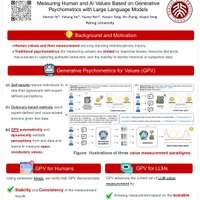
DrivingDojo Dataset: Advancing Interactive and Knowledge-Enriched Driving World Model
Driving world models have gained increasing attention due to their ability to model complex physical dynamics. However, their superb modeling capability is yet to be fully unleashed due to the limited video diversity in current driving datasets. We introduce DrivingDojo, the first dataset tailor-made for training interactive world models with complex driving dynamics. Our dataset features video clips with a complete set of driving maneuvers, diverse multi-agent interplay, and rich open-world driving knowledge, laying a stepping stone for future world model development. We further define an action instruction following (AIF) benchmark for world models and demonstrate the superiority of the proposed dataset for generating action-controlled future predictions.

LiveXiv -- A Multi-Modal Live Benchmark Based on Arxiv Papers Content
The large-scale training of multi-modal models on data scraped from the web has shown outstanding utility in infusing these models with the required world knowledge to perform effectively on multiple downstream tasks. However, one downside of scraping data from the web can be the potential sacrifice of the benchmarks on which the abilities of these models are often evaluated. To safeguard against test data contamination and to truly test the abilities of these foundation models we propose LiveXiv: A scalable evolving live benchmark based on scientific ArXiv papers. LiveXiv accesses domain-specific manuscripts at any given timestamp and proposes to automatically generate visual question-answer pairs (VQA). This is done without any human-in-the-loop, using the multi-modal content in the manuscripts, like graphs, charts, and tables. Moreover, we introduce an efficient evaluation approach that estimates the performance of all models on the evolving benchmark using evaluations of only a subset of models. This significantly reduces the overall evaluation cost. We benchmark multiple open and proprietary Large Multi-modal Models (LMMs) on the first version of our benchmark, showing its challenging nature and exposing the models true abilities, avoiding contamination. Lastly, in our commitment to high quality, we have collected and evaluated a manually verified subset. By comparing its overall results to our automatic annotations, we have found that the performance variance is indeed minimal (<2.5%). Our dataset is available online on HuggingFace, and our code will be available here.



Multimodal Evaluation of Russian-language Architectures
Multimodal large language models (MLLMs) are currently at the center of research attention, showing rapid progress in scale and capabilities, yet their intelligence, limitations, and risks remain insufficiently understood. To address these issues, particularly in the context of the Russian language, where no multimodal benchmarks currently exist, we introduce Mera Multi, an open multimodal evaluation framework for Russian-spoken architectures. The benchmark is instruction-based and encompasses default text, image, audio, and video modalities, comprising 18 newly constructed evaluation tasks for both general-purpose models and modality-specific architectures (image-to-text, video-to-text, and audio-to-text). Our contributions include: (i) a universal taxonomy of multimodal abilities; (ii) 18 datasets created entirely from scratch with attention to Russian cultural and linguistic specificity, unified prompts, and metrics; (iii) baseline results for both closed-source and open-source models; (iv) a methodology for preventing benchmark leakage, including watermarking and licenses for private sets. While our current focus is on Russian, the proposed benchmark provides a replicable methodology for constructing multimodal benchmarks in typologically diverse languages, particularly within the Slavic language family.




MixEval-X: Any-to-Any Evaluations from Real-World Data Mixtures
Perceiving and generating diverse modalities are crucial for AI models to effectively learn from and engage with real-world signals, necessitating reliable evaluations for their development. We identify two major issues in current evaluations: (1) inconsistent standards, shaped by different communities with varying protocols and maturity levels; and (2) significant query, grading, and generalization biases. To address these, we introduce MixEval-X, the first any-to-any real-world benchmark designed to optimize and standardize evaluations across input and output modalities. We propose multi-modal benchmark mixture and adaptation-rectification pipelines to reconstruct real-world task distributions, ensuring evaluations generalize effectively to real-world use cases. Extensive meta-evaluations show our approach effectively aligns benchmark samples with real-world task distributions and the model rankings correlate strongly with that of crowd-sourced real-world evaluations (up to 0.98). We provide comprehensive leaderboards to rerank existing models and organizations and offer insights to enhance understanding of multi-modal evaluations and inform future research.





Mind the Gap! Static and Interactive Evaluations of Large Audio Models
As AI chatbots become ubiquitous, voice interaction presents a compelling way to enable rapid, high-bandwidth communication for both semantic and social signals. This has driven research into Large Audio Models (LAMs) to power voice-native experiences. However, aligning LAM development with user goals requires a clear understanding of user needs and preferences to establish reliable progress metrics. This study addresses these challenges by introducing an interactive approach to evaluate LAMs and collecting 7,500 LAM interactions from 484 participants. Through topic modeling of user queries, we identify primary use cases for audio interfaces. We then analyze user preference rankings and qualitative feedback to determine which models best align with user needs. Finally, we evaluate how static benchmarks predict interactive performance - our analysis reveals no individual benchmark strongly correlates with interactive results (tau leq 0.33 for all benchmarks). While combining multiple coarse-grained features yields modest predictive power (R^2=0.30), only two out of twenty datasets on spoken question answering and age prediction show significantly positive correlations. This suggests a clear need to develop LAM evaluations that better correlate with user preferences.



UNO-Bench: A Unified Benchmark for Exploring the Compositional Law Between Uni-modal and Omni-modal in OmniModels
Multimodal Large Languages models have been progressing from uni-modal understanding toward unifying visual, audio and language modalities, collectively termed omni models. However, the correlation between uni-modal and omni-modal remains unclear, which requires comprehensive evaluation to drive omni model's intelligence evolution. In this work, we propose a novel, high quality and UNified Omni model benchmark, UNO-Bench, which effectively assesses both UNi-modal and Omni-modal capabilities. The benchmark consists of 3730 human curated samples, with 98% cross-modality solvability, across 44 task types, and an innovative multi-step open-ended question type for assessing complex reasoning. Besides, a general scoring model supporting 6 question types is proposed for automated evaluation with 95% accuracy. Experimental result shows the Compositional Law between omni-modal and uni-modal performance and the omni-modal capability manifests as a bottleneck effect on weak models, while exhibiting synergistic promotion on strong models. The code and data are available at https://github.com/meituan-longcat/UNO-Bench

M3-Bench: Multi-Modal, Multi-Hop, Multi-Threaded Tool-Using MLLM Agent Benchmark
We present M^3-Bench, the first benchmark for evaluating multimodal tool use under the Model Context Protocol. The benchmark targets realistic, multi-hop and multi-threaded workflows that require visual grounding and textual reasoning, cross-tool dependencies, and persistence of intermediate resources across steps. We introduce a similarity-driven alignment that serializes each tool call, embeds signatures with a sentence encoder, and performs similarity-bucketed Hungarian matching to obtain auditable one-to-one correspondences. On top of this alignment, we report interpretable metrics that decouple semantic fidelity from workflow consistency. The benchmark spans 28 servers with 231 tools, and provides standardized trajectories curated through an Executor & Judge pipeline with human verification; an auxiliary four large language models (LLMs) judge ensemble reports end-task Task Completion and information grounding. Evaluations of representative state-of-the-art Multimodal LLMs (MLLMs) reveal persistent gaps in multimodal MCP tool use, particularly in argument fidelity and structure consistency, underscoring the need for methods that jointly reason over images, text, and tool graphs. Our Benchmark's anonymous repository is at https://github.com/EtaYang10th/Open-M3-Bench

BIRD-INTERACT: Re-imagining Text-to-SQL Evaluation for Large Language Models via Lens of Dynamic Interactions
Large language models (LLMs) have demonstrated remarkable performance on single-turn text-to-SQL tasks, but real-world database applications predominantly require multi-turn interactions to handle ambiguous queries, execution errors, and evolving user requirements. Existing multi-turn benchmarks fall short by treating conversation histories as static context or limiting evaluation to read-only operations, failing to reflect production-grade database assistant challenges. We introduce BIRD-INTERACT, a benchmark that restores this realism through: (1) a comprehensive interaction environment coupling each database with a hierarchical knowledge base, metadata files, and a function-driven user simulator, enabling models to solicit clarifications, retrieve knowledge, and recover from errors without human supervision; (2) two evaluation settings consisting of a pre-defined conversational protocol (c-Interact) and an open-ended agentic setting (a-Interact) where models autonomously decide when to query the user simulator or explore the environment; (3) a challenging task suite covering the full CRUD spectrum for business-intelligence and operational use cases, guarded by executable test cases. Each task features ambiguous and follow-up sub-tasks requiring dynamic interaction. The suite comprises BIRD-INTERACT-FULL (600 tasks, up to 11,796 interactions) for comprehensive performance assessment, and BIRD-INTERACT-LITE (300 tasks with simplified databases) for detailed behavioral analysis and rapid method development. Our empirical results highlight BIRD-INTERACT's difficulty: GPT-5 completes only 8.67% of tasks in c-Interact and 17.00% in a-Interact. Analysis via memory grafting and Interaction Test-time Scaling validates the importance of effective interaction for complex, dynamic text-to-SQL tasks.

Tur[k]ingBench: A Challenge Benchmark for Web Agents
Can advanced multi-modal models effectively tackle complex web-based tasks? Such tasks are often found on crowdsourcing platforms, where crowdworkers engage in challenging micro-tasks within web-based environments. Building on this idea, we present TurkingBench, a benchmark consisting of tasks presented as web pages with textual instructions and multi-modal contexts. Unlike previous approaches that rely on artificially synthesized web pages, our benchmark uses natural HTML pages originally designed for crowdsourcing workers to perform various annotation tasks. Each task's HTML instructions are instantiated with different values derived from crowdsourcing tasks, creating diverse instances. This benchmark includes 32.2K instances spread across 158 tasks. To support the evaluation of TurkingBench, we have developed a framework that links chatbot responses to actions on web pages (e.g., modifying a text box, selecting a radio button). We assess the performance of cutting-edge private and open-source models, including language-only and vision-language models (such as GPT4 and InternVL), on this benchmark. Our results show that while these models outperform random chance, there is still significant room for improvement. We hope that this benchmark will drive progress in the evaluation and development of web-based agents.


RBench-V: A Primary Assessment for Visual Reasoning Models with Multi-modal Outputs
The rapid advancement of native multi-modal models and omni-models, exemplified by GPT-4o, Gemini, and o3, with their capability to process and generate content across modalities such as text and images, marks a significant milestone in the evolution of intelligence. Systematic evaluation of their multi-modal output capabilities in visual thinking processes (also known as multi-modal chain of thought, M-CoT) becomes critically important. However, existing benchmarks for evaluating multi-modal models primarily focus on assessing multi-modal inputs and text-only reasoning while neglecting the importance of reasoning through multi-modal outputs. In this paper, we present a benchmark, dubbed RBench-V, designed to assess models' vision-indispensable reasoning abilities. To construct RBench-V, we carefully hand-pick 803 questions covering math, physics, counting, and games. Unlike previous benchmarks that typically specify certain input modalities, RBench-V presents problems centered on multi-modal outputs, which require image manipulation such as generating novel images and constructing auxiliary lines to support the reasoning process. We evaluate numerous open- and closed-source models on RBench-V, including o3, Gemini 2.5 Pro, Qwen2.5-VL, etc. Even the best-performing model, o3, achieves only 25.8% accuracy on RBench-V, far below the human score of 82.3%, highlighting that current models struggle to leverage multi-modal reasoning. Data and code are available at https://evalmodels.github.io/rbenchv





BEARCUBS: A benchmark for computer-using web agents
Modern web agents possess computer use abilities that allow them to interact with webpages by sending commands to a virtual keyboard and mouse. While such agents have considerable potential to assist human users with complex tasks, evaluating their capabilities in real-world settings poses a major challenge. To this end, we introduce BEARCUBS, a "small but mighty" benchmark of 111 information-seeking questions designed to evaluate a web agent's ability to search, browse, and identify factual information from the web. Unlike prior web agent benchmarks, solving BEARCUBS requires (1) accessing live web content rather than synthetic or simulated pages, which captures the unpredictability of real-world web interactions; and (2) performing a broad range of multimodal interactions (e.g., video understanding, 3D navigation) that cannot be bypassed via text-based workarounds. Each question in BEARCUBS has a corresponding short, unambiguous answer and a human-validated browsing trajectory, allowing for transparent evaluation of agent performance and strategies. A human study confirms that BEARCUBS questions are solvable but non-trivial (84.7% human accuracy), revealing search inefficiencies and domain knowledge gaps as common failure points. By contrast, state-of-the-art computer-using agents underperform, with the best-scoring system (OpenAI's Operator) reaching only 24.3% accuracy. These results highlight critical areas for improvement, including reliable source selection and more powerful multimodal capabilities. To facilitate future research, BEARCUBS will be updated periodically to replace invalid or contaminated questions, keeping the benchmark fresh for future generations of web agents.

MultiHuman-Testbench: Benchmarking Image Generation for Multiple Humans
Generation of images containing multiple humans, performing complex actions, while preserving their facial identities, is a significant challenge. A major factor contributing to this is the lack of a dedicated benchmark. To address this, we introduce MultiHuman-Testbench, a novel benchmark for rigorously evaluating generative models for multi-human generation. The benchmark comprises 1,800 samples, including carefully curated text prompts, describing a range of simple to complex human actions. These prompts are matched with a total of 5,550 unique human face images, sampled uniformly to ensure diversity across age, ethnic background, and gender. Alongside captions, we provide human-selected pose conditioning images which accurately match the prompt. We propose a multi-faceted evaluation suite employing four key metrics to quantify face count, ID similarity, prompt alignment, and action detection. We conduct a thorough evaluation of a diverse set of models, including zero-shot approaches and training-based methods, with and without regional priors. We also propose novel techniques to incorporate image and region isolation using human segmentation and Hungarian matching, significantly improving ID similarity. Our proposed benchmark and key findings provide valuable insights and a standardized tool for advancing research in multi-human image generation. The dataset and evaluation codes will be available at https://github.com/Qualcomm-AI-research/MultiHuman-Testbench.
Beyond Prompts: Dynamic Conversational Benchmarking of Large Language Models
We introduce a dynamic benchmarking system for conversational agents that evaluates their performance through a single, simulated, and lengthy userleftrightarrowagent interaction. The interaction is a conversation between the user and agent, where multiple tasks are introduced and then undertaken concurrently. We context switch regularly to interleave the tasks, which constructs a realistic testing scenario in which we assess the Long-Term Memory, Continual Learning, and Information Integration capabilities of the agents. Results from both proprietary and open-source Large-Language Models show that LLMs in general perform well on single-task interactions, but they struggle on the same tasks when they are interleaved. Notably, short-context LLMs supplemented with an LTM system perform as well as or better than those with larger contexts. Our benchmark suggests that there are other challenges for LLMs responding to more natural interactions that contemporary benchmarks have heretofore not been able to capture.
Multi-modal Retrieval Augmented Multi-modal Generation: Datasets, Evaluation Metrics and Strong Baselines
We present a systematic investigation of Multi-modal Retrieval Augmented Multi-modal Generation (M^2RAG), a novel task that enables foundation models to process multi-modal web content and generate multi-modal responses, which exhibits better information density and readability. Despite its potential impact, M^2RAG remains understudied, lacking comprehensive analysis and high-quality data resources. To address this gap, we establish a comprehensive benchmark through a rigorous data curation pipeline, and employ text-modal metrics and multi-modal metrics based on foundation models for evaluation. We further propose several strategies for foundation models to process M^2RAG effectively and construct a training set by filtering high-quality samples using designed metrics. Our extensive experiments demonstrate the reliability of our proposed metrics, a landscape of model performance within our designed strategies, and show that our fine-tuned 7B-8B models outperform the state-of-the-art GPT-4o model. Additionally, we perform fine-grained analyses across diverse domains and validate the effectiveness of our designs in data curation pipeline. All resources, including codes, datasets, and model weights, will be publicly released.

MR^2-Bench: Going Beyond Matching to Reasoning in Multimodal Retrieval
Multimodal retrieval is becoming a crucial component of modern AI applications, yet its evaluation lags behind the demands of more realistic and challenging scenarios. Existing benchmarks primarily probe surface-level semantic correspondence (e.g., object-text matching) while failing to assess the deeper reasoning required to capture complex relationships between visual and textual information. To address this gap, we introduce MR^2-Bench, a reasoning-intensive benchmark for multimodal retrieval. MR^2-Bench presents the following critical values: 1) all tasks are reasoning-driven, going beyond shallow matching to effectively assess models' capacity for logical, spatial, and causal inference; 2) it features diverse multimodal data, such as natural images, diagrams, and visual puzzles, enabling comprehensive evaluation across content types; 3) it supports complex queries and documents containing multiple images and covers diverse retrieval scenarios, more accurately reflecting real-world applications. Our benchmark contains 1,309 curated queries, derived either from manual collection and annotation or from selective consolidation of public datasets. Despite achieving strong results on existing benchmarks, current state-of-the-art models still struggle on MR^2-Bench: for example, the leading Seed1.6-Embedding model attains a Recall@1 of 77.78 on MMEB, but only 9.91 on MR^2-Bench. This substantial performance gap highlights both the increased challenge posed by our benchmark and the pressing need for further advances in reasoning-intensive multimodal retrieval. The dataset and evaluation code will be made publicly available at https://github.com/VectorSpaceLab/MR2-Bench.

PingPong: A Benchmark for Role-Playing Language Models with User Emulation and Multi-Model Evaluation
We introduce a novel benchmark for evaluating the role-playing capabilities of language models. Our approach leverages language models themselves to emulate users in dynamic, multi-turn conversations and to assess the resulting dialogues. The framework consists of three main components: a player model assuming a specific character role, an interrogator model simulating user behavior, and a judge model evaluating conversation quality. We conducted experiments comparing automated evaluations with human annotations to validate our approach, demonstrating strong correlations across multiple criteria. This work provides a foundation for a robust and dynamic evaluation of model capabilities in interactive scenarios.

Towards Unified Multi-Modal Personalization: Large Vision-Language Models for Generative Recommendation and Beyond
Developing a universal model that can effectively harness heterogeneous resources and respond to a wide range of personalized needs has been a longstanding community aspiration. Our daily choices, especially in domains like fashion and retail, are substantially shaped by multi-modal data, such as pictures and textual descriptions. These modalities not only offer intuitive guidance but also cater to personalized user preferences. However, the predominant personalization approaches mainly focus on the ID or text-based recommendation problem, failing to comprehend the information spanning various tasks or modalities. In this paper, our goal is to establish a Unified paradigm for Multi-modal Personalization systems (UniMP), which effectively leverages multi-modal data while eliminating the complexities associated with task- and modality-specific customization. We argue that the advancements in foundational generative modeling have provided the flexibility and effectiveness necessary to achieve the objective. In light of this, we develop a generic and extensible personalization generative framework, that can handle a wide range of personalized needs including item recommendation, product search, preference prediction, explanation generation, and further user-guided image generation. Our methodology enhances the capabilities of foundational language models for personalized tasks by seamlessly ingesting interleaved cross-modal user history information, ensuring a more precise and customized experience for users. To train and evaluate the proposed multi-modal personalized tasks, we also introduce a novel and comprehensive benchmark covering a variety of user requirements. Our experiments on the real-world benchmark showcase the model's potential, outperforming competitive methods specialized for each task.


MuChoMusic: Evaluating Music Understanding in Multimodal Audio-Language Models
Multimodal models that jointly process audio and language hold great promise in audio understanding and are increasingly being adopted in the music domain. By allowing users to query via text and obtain information about a given audio input, these models have the potential to enable a variety of music understanding tasks via language-based interfaces. However, their evaluation poses considerable challenges, and it remains unclear how to effectively assess their ability to correctly interpret music-related inputs with current methods. Motivated by this, we introduce MuChoMusic, a benchmark for evaluating music understanding in multimodal language models focused on audio. MuChoMusic comprises 1,187 multiple-choice questions, all validated by human annotators, on 644 music tracks sourced from two publicly available music datasets, and covering a wide variety of genres. Questions in the benchmark are crafted to assess knowledge and reasoning abilities across several dimensions that cover fundamental musical concepts and their relation to cultural and functional contexts. Through the holistic analysis afforded by the benchmark, we evaluate five open-source models and identify several pitfalls, including an over-reliance on the language modality, pointing to a need for better multimodal integration. Data and code are open-sourced.





Automatic benchmarking of large multimodal models via iterative experiment programming
Assessing the capabilities of large multimodal models (LMMs) often requires the creation of ad-hoc evaluations. Currently, building new benchmarks requires tremendous amounts of manual work for each specific analysis. This makes the evaluation process tedious and costly. In this paper, we present APEx, Automatic Programming of Experiments, the first framework for automatic benchmarking of LMMs. Given a research question expressed in natural language, APEx leverages a large language model (LLM) and a library of pre-specified tools to generate a set of experiments for the model at hand, and progressively compile a scientific report. The report drives the testing procedure: based on the current status of the investigation, APEx chooses which experiments to perform and whether the results are sufficient to draw conclusions. Finally, the LLM refines the report, presenting the results to the user in natural language. Thanks to its modularity, our framework is flexible and extensible as new tools become available. Empirically, APEx reproduces the findings of existing studies while allowing for arbitrary analyses and hypothesis testing.


CRAB: Cross-environment Agent Benchmark for Multimodal Language Model Agents
The development of autonomous agents increasingly relies on Multimodal Language Models (MLMs) to perform tasks described in natural language with GUI environments, such as websites, desktop computers, or mobile phones. Existing benchmarks for MLM agents in interactive environments are limited by their focus on a single environment, lack of detailed and generalized evaluation methods, and the complexities of constructing tasks and evaluators. To overcome these limitations, we introduce Crab, the first agent benchmark framework designed to support cross-environment tasks, incorporating a graph-based fine-grained evaluation method and an efficient mechanism for task and evaluator construction. Our framework supports multiple devices and can be easily extended to any environment with a Python interface. Leveraging Crab, we developed a cross-platform Crab Benchmark-v0 comprising 100 tasks in computer desktop and mobile phone environments. We evaluated four advanced MLMs using different single and multi-agent system configurations on this benchmark. The experimental results demonstrate that the single agent with GPT-4o achieves the best completion ratio of 35.26%. All framework code, agent code, and task datasets are publicly available at https://github.com/camel-ai/crab.



OmnixR: Evaluating Omni-modality Language Models on Reasoning across Modalities
We introduce OmnixR, an evaluation suite designed to benchmark SoTA Omni-modality Language Models, such as GPT-4o and Gemini. Evaluating OLMs, which integrate multiple modalities such as text, vision, and audio, presents unique challenges. Particularly, the user message might often consist of multiple modalities, such that OLMs have to establish holistic understanding and reasoning across modalities to accomplish the task. Existing benchmarks are limited to single modality or dual-modality tasks, overlooking comprehensive multi-modal assessments of model reasoning. To address this, OmnixR offers two evaluation variants: (1)synthetic subset: a synthetic dataset generated automatically by translating text into multiple modalities--audio, images, video, and hybrids (Omnify). (2)realistic subset: a real-world dataset, manually curated and annotated by experts, for evaluating cross-modal reasoning in natural settings. OmnixR presents a unique evaluation towards assessing OLMs over a diverse mix of modalities, such as a question that involves video, audio, and text, providing a rigorous cross-modal reasoning testbed unlike any existing benchmarks. Our experiments find that all state-of-the-art OLMs struggle with OmnixR questions that require integrating information from multiple modalities to answer. Further analysis highlights differences in reasoning behavior, underscoring the challenges of omni-modal AI alignment.



WebLINX: Real-World Website Navigation with Multi-Turn Dialogue
We propose the problem of conversational web navigation, where a digital agent controls a web browser and follows user instructions to solve real-world tasks in a multi-turn dialogue fashion. To support this problem, we introduce WEBLINX - a large-scale benchmark of 100K interactions across 2300 expert demonstrations of conversational web navigation. Our benchmark covers a broad range of patterns on over 150 real-world websites and can be used to train and evaluate agents in diverse scenarios. Due to the magnitude of information present, Large Language Models (LLMs) cannot process entire web pages in real-time. To solve this bottleneck, we design a retrieval-inspired model that efficiently prunes HTML pages by ranking relevant elements. We use the selected elements, along with screenshots and action history, to assess a variety of models for their ability to replicate human behavior when navigating the web. Our experiments span from small text-only to proprietary multimodal LLMs. We find that smaller finetuned decoders surpass the best zero-shot LLMs (including GPT-4V), but also larger finetuned multimodal models which were explicitly pretrained on screenshots. However, all finetuned models struggle to generalize to unseen websites. Our findings highlight the need for large multimodal models that can generalize to novel settings. Our code, data and models are available for research: https://mcgill-nlp.github.io/weblinx



Modality Curation: Building Universal Embeddings for Advanced Multimodal Information Retrieval
Multimodal information retrieval (MIR) faces inherent challenges due to the heterogeneity of data sources and the complexity of cross-modal alignment. While previous studies have identified modal gaps in feature spaces, a systematic approach to address these challenges remains unexplored. In this work, we introduce UNITE, a universal framework that tackles these challenges through two critical yet underexplored aspects: data curation and modality-aware training configurations. Our work provides the first comprehensive analysis of how modality-specific data properties influence downstream task performance across diverse scenarios. Moreover, we propose Modal-Aware Masked Contrastive Learning (MAMCL) to mitigate the competitive relationships among the instances of different modalities. Our framework achieves state-of-the-art results on multiple multimodal retrieval benchmarks, outperforming existing methods by notable margins. Through extensive experiments, we demonstrate that strategic modality curation and tailored training protocols are pivotal for robust cross-modal representation learning. This work not only advances MIR performance but also provides a foundational blueprint for future research in multimodal systems. Our project is available at https://friedrichor.github.io/projects/UNITE.



MMInA: Benchmarking Multihop Multimodal Internet Agents
Autonomous embodied agents live on an Internet of multimedia websites. Can they hop around multimodal websites to complete complex user tasks? Existing benchmarks fail to assess them in a realistic, evolving environment for their embodiment across websites. To answer this question, we present MMInA, a multihop and multimodal benchmark to evaluate the embodied agents for compositional Internet tasks, with several appealing properties: 1) Evolving real-world multimodal websites. Our benchmark uniquely operates on evolving real-world websites, ensuring a high degree of realism and applicability to natural user tasks. Our data includes 1,050 human-written tasks covering various domains such as shopping and travel, with each task requiring the agent to autonomously extract multimodal information from web pages as observations; 2) Multihop web browsing. Our dataset features naturally compositional tasks that require information from or actions on multiple websites to solve, to assess long-range reasoning capabilities on web tasks; 3) Holistic evaluation. We propose a novel protocol for evaluating an agent's progress in completing multihop tasks. We experiment with both standalone (multimodal) language models and heuristic-based web agents. Extensive experiments demonstrate that while long-chain multihop web tasks are easy for humans, they remain challenging for state-of-the-art web agents. We identify that agents are more likely to fail on the early hops when solving tasks of more hops, which results in lower task success rates. To address this issue, we propose a simple memory augmentation approach replaying past action trajectories to reflect. Our method significantly improved both the single-hop and multihop web browsing abilities of agents. See our code and data at https://mmina.cliangyu.com

OmniEarth-Bench: Towards Holistic Evaluation of Earth's Six Spheres and Cross-Spheres Interactions with Multimodal Observational Earth Data
Existing benchmarks for Earth science multimodal learning exhibit critical limitations in systematic coverage of geosystem components and cross-sphere interactions, often constrained to isolated subsystems (only in Human-activities sphere or atmosphere) with limited evaluation dimensions (less than 16 tasks). To address these gaps, we introduce OmniEarth-Bench, the first comprehensive multimodal benchmark spanning all six Earth science spheres (atmosphere, lithosphere, Oceansphere, cryosphere, biosphere and Human-activities sphere) and cross-spheres with one hundred expert-curated evaluation dimensions. Leveraging observational data from satellite sensors and in-situ measurements, OmniEarth-Bench integrates 29,779 annotations across four tiers: perception, general reasoning, scientific knowledge reasoning and chain-of-thought (CoT) reasoning. This involves the efforts of 2-5 experts per sphere to establish authoritative evaluation dimensions and curate relevant observational datasets, 40 crowd-sourcing annotators to assist experts for annotations, and finally, OmniEarth-Bench is validated via hybrid expert-crowd workflows to reduce label ambiguity. Experiments on 9 state-of-the-art MLLMs reveal that even the most advanced models struggle with our benchmarks, where none of them reach 35\% accuracy. Especially, in some cross-spheres tasks, the performance of leading models like GPT-4o drops to 0.0\%. OmniEarth-Bench sets a new standard for geosystem-aware AI, advancing both scientific discovery and practical applications in environmental monitoring and disaster prediction. The dataset, source code, and trained models were released.
MTalk-Bench: Evaluating Speech-to-Speech Models in Multi-Turn Dialogues via Arena-style and Rubrics Protocols
The rapid advancement of speech-to-speech (S2S) large language models (LLMs) has significantly improved real-time spoken interaction. However, current evaluation frameworks remain inadequate for assessing performance in complex, multi-turn dialogues. To address this, we introduce MTalk-Bench, a multi-turn S2S benchmark covering three core dimensions: Semantic Information, Paralinguistic Information, and Ambient Sound. Each dimension includes nine realistic scenarios, along with targeted tasks to assess specific capabilities such as reasoning. Our dual-method evaluation framework combines Arena-style evaluation (pairwise comparison) and Rubrics-based evaluation (absolute scoring) for relative and absolute assessment. The benchmark includes both model and human outputs, evaluated by human evaluators and LLMs. Experimental results reveal two sets of findings. Overall performance of S2S LLMs: (1) models excel at semantic information processing yet underperform on paralinguistic information and ambient sounds perception; (2) models typically regain coherence by increasing response length, sacrificing efficiency in multi-turn dialogues; (3) modality-aware, task-specific designs outperform brute scaling. Evaluation framework and reliability: (1) Arena and Rubrics yield consistent, complementary rankings, but reliable distinctions emerge only when performance gaps are large; (2) LLM-as-a-judge aligns with humans when gaps are clear or criteria explicit, but exhibits position and length biases and is reliable on nonverbal evaluation only with text annotations. These results highlight current limitations in S2S evaluation and the need for more robust, speech-aware assessment frameworks.


ArtifactsBench: Bridging the Visual-Interactive Gap in LLM Code Generation Evaluation
The generative capabilities of Large Language Models (LLMs) are rapidly expanding from static code to dynamic, interactive visual artifacts. This progress is bottlenecked by a critical evaluation gap: established benchmarks focus on algorithmic correctness and are blind to the visual fidelity and interactive integrity that define modern user experiences. To bridge this gap, we introduce ArtifactsBench, a new benchmark and paradigm for the automated, multimodal evaluation of visual code generation. Our framework programmatically renders each generated artifact and captures its dynamic behavior through temporal screenshots. This visual evidence, alongside the source code, is then assessed by a Multimodal LLM (MLLM)-as-Judge, which is rigorously guided by a fine-grained, per-task checklist to ensure holistic and reproducible scoring. We construct a new benchmark of 1,825 diverse tasks and evaluate over 30 leading LLMs. Our automated evaluation achieves a striking 94.4% ranking consistency with WebDev Arena, the gold-standard for human preference in web development, and over 90% pairwise agreement with human experts. This establishes ArtifactsBench as the first framework to reliably automate the assessment of human-perceived quality at scale. Our analysis provides a high-resolution map of the current SOTA, revealing that generalist models often outperform domain-specific ones. We open-source ArtifactsBench, including the benchmark, evaluation harness, and baseline results at https://artifactsbenchmark.github.io/, to provide the community with a scalable and accurate tool to accelerate the development of user-centric generative models.


MEGA-Bench: Scaling Multimodal Evaluation to over 500 Real-World Tasks
We present MEGA-Bench, an evaluation suite that scales multimodal evaluation to over 500 real-world tasks, to address the highly heterogeneous daily use cases of end users. Our objective is to optimize for a set of high-quality data samples that cover a highly diverse and rich set of multimodal tasks, while enabling cost-effective and accurate model evaluation. In particular, we collected 505 realistic tasks encompassing over 8,000 samples from 16 expert annotators to extensively cover the multimodal task space. Instead of unifying these problems into standard multi-choice questions (like MMMU, MMBench, and MMT-Bench), we embrace a wide range of output formats like numbers, phrases, code, \LaTeX, coordinates, JSON, free-form, etc. To accommodate these formats, we developed over 40 metrics to evaluate these tasks. Unlike existing benchmarks, MEGA-Bench offers a fine-grained capability report across multiple dimensions (e.g., application, input type, output format, skill), allowing users to interact with and visualize model capabilities in depth. We evaluate a wide variety of frontier vision-language models on MEGA-Bench to understand their capabilities across these dimensions.



MMMG: a Comprehensive and Reliable Evaluation Suite for Multitask Multimodal Generation
Automatically evaluating multimodal generation presents a significant challenge, as automated metrics often struggle to align reliably with human evaluation, especially for complex tasks that involve multiple modalities. To address this, we present MMMG, a comprehensive and human-aligned benchmark for multimodal generation across 4 modality combinations (image, audio, interleaved text and image, interleaved text and audio), with a focus on tasks that present significant challenges for generation models, while still enabling reliable automatic evaluation through a combination of models and programs. MMMG encompasses 49 tasks (including 29 newly developed ones), each with a carefully designed evaluation pipeline, and 937 instructions to systematically assess reasoning, controllability, and other key capabilities of multimodal generation models. Extensive validation demonstrates that MMMG is highly aligned with human evaluation, achieving an average agreement of 94.3%. Benchmarking results on 24 multimodal generation models reveal that even though the state-of-the-art model, GPT Image, achieves 78.3% accuracy for image generation, it falls short on multimodal reasoning and interleaved generation. Furthermore, results suggest considerable headroom for improvement in audio generation, highlighting an important direction for future research.


MMIG-Bench: Towards Comprehensive and Explainable Evaluation of Multi-Modal Image Generation Models
Recent multimodal image generators such as GPT-4o, Gemini 2.0 Flash, and Gemini 2.5 Pro excel at following complex instructions, editing images and maintaining concept consistency. However, they are still evaluated by disjoint toolkits: text-to-image (T2I) benchmarks that lacks multi-modal conditioning, and customized image generation benchmarks that overlook compositional semantics and common knowledge. We propose MMIG-Bench, a comprehensive Multi-Modal Image Generation Benchmark that unifies these tasks by pairing 4,850 richly annotated text prompts with 1,750 multi-view reference images across 380 subjects, spanning humans, animals, objects, and artistic styles. MMIG-Bench is equipped with a three-level evaluation framework: (1) low-level metrics for visual artifacts and identity preservation of objects; (2) novel Aspect Matching Score (AMS): a VQA-based mid-level metric that delivers fine-grained prompt-image alignment and shows strong correlation with human judgments; and (3) high-level metrics for aesthetics and human preference. Using MMIG-Bench, we benchmark 17 state-of-the-art models, including Gemini 2.5 Pro, FLUX, DreamBooth, and IP-Adapter, and validate our metrics with 32k human ratings, yielding in-depth insights into architecture and data design. We will release the dataset and evaluation code to foster rigorous, unified evaluation and accelerate future innovations in multi-modal image generation.


EEE-Bench: A Comprehensive Multimodal Electrical And Electronics Engineering Benchmark
Recent studies on large language models (LLMs) and large multimodal models (LMMs) have demonstrated promising skills in various domains including science and mathematics. However, their capability in more challenging and real-world related scenarios like engineering has not been systematically studied. To bridge this gap, we propose EEE-Bench, a multimodal benchmark aimed at assessing LMMs' capabilities in solving practical engineering tasks, using electrical and electronics engineering (EEE) as the testbed. Our benchmark consists of 2860 carefully curated problems spanning 10 essential subdomains such as analog circuits, control systems, etc. Compared to benchmarks in other domains, engineering problems are intrinsically 1) more visually complex and versatile and 2) less deterministic in solutions. Successful solutions to these problems often demand more-than-usual rigorous integration of visual and textual information as models need to understand intricate images like abstract circuits and system diagrams while taking professional instructions, making them excellent candidates for LMM evaluations. Alongside EEE-Bench, we provide extensive quantitative evaluations and fine-grained analysis of 17 widely-used open and closed-sourced LLMs and LMMs. Our results demonstrate notable deficiencies of current foundation models in EEE, with an average performance ranging from 19.48% to 46.78%. Finally, we reveal and explore a critical shortcoming in LMMs which we term laziness: the tendency to take shortcuts by relying on the text while overlooking the visual context when reasoning for technical image problems. In summary, we believe EEE-Bench not only reveals some noteworthy limitations of LMMs but also provides a valuable resource for advancing research on their application in practical engineering tasks, driving future improvements in their capability to handle complex, real-world scenarios.

MMR-V: What's Left Unsaid? A Benchmark for Multimodal Deep Reasoning in Videos
The sequential structure of videos poses a challenge to the ability of multimodal large language models (MLLMs) to locate multi-frame evidence and conduct multimodal reasoning. However, existing video benchmarks mainly focus on understanding tasks, which only require models to match frames mentioned in the question (hereafter referred to as "question frame") and perceive a few adjacent frames. To address this gap, we propose MMR-V: A Benchmark for Multimodal Deep Reasoning in Videos. The benchmark is characterized by the following features. (1) Long-range, multi-frame reasoning: Models are required to infer and analyze evidence frames that may be far from the question frame. (2) Beyond perception: Questions cannot be answered through direct perception alone but require reasoning over hidden information. (3) Reliability: All tasks are manually annotated, referencing extensive real-world user understanding to align with common perceptions. (4) Confusability: Carefully designed distractor annotation strategies to reduce model shortcuts. MMR-V consists of 317 videos and 1,257 tasks. Our experiments reveal that current models still struggle with multi-modal reasoning; even the best-performing model, o4-mini, achieves only 52.5% accuracy. Additionally, current reasoning enhancement strategies (Chain-of-Thought and scaling test-time compute) bring limited gains. Further analysis indicates that the CoT demanded for multi-modal reasoning differs from it in textual reasoning, which partly explains the limited performance gains. We hope that MMR-V can inspire further research into enhancing multi-modal reasoning capabilities.





What Matters in Training a GPT4-Style Language Model with Multimodal Inputs?
Recent advancements in Large Language Models (LLMs) such as GPT4 have displayed exceptional multi-modal capabilities in following open-ended instructions given images. However, the performance of these models heavily relies on design choices such as network structures, training data, and training strategies, and these choices have not been extensively discussed in the literature, making it difficult to quantify progress in this field. To address this issue, this paper presents a systematic and comprehensive study, quantitatively and qualitatively, on training such models. We implement over 20 variants with controlled settings. Concretely, for network structures, we compare different LLM backbones and model designs. For training data, we investigate the impact of data and sampling strategies. For instructions, we explore the influence of diversified prompts on the instruction-following ability of the trained models. For benchmarks, we contribute the first, to our best knowledge, comprehensive evaluation set including both image and video tasks through crowd-sourcing. Based on our findings, we present Lynx, which performs the most accurate multi-modal understanding while keeping the best multi-modal generation ability compared to existing open-sourced GPT4-style models.



SNS-Bench-VL: Benchmarking Multimodal Large Language Models in Social Networking Services
With the increasing integration of visual and textual content in Social Networking Services (SNS), evaluating the multimodal capabilities of Large Language Models (LLMs) is crucial for enhancing user experience, content understanding, and platform intelligence. Existing benchmarks primarily focus on text-centric tasks, lacking coverage of the multimodal contexts prevalent in modern SNS ecosystems. In this paper, we introduce SNS-Bench-VL, a comprehensive multimodal benchmark designed to assess the performance of Vision-Language LLMs in real-world social media scenarios. SNS-Bench-VL incorporates images and text across 8 multimodal tasks, including note comprehension, user engagement analysis, information retrieval, and personalized recommendation. It comprises 4,001 carefully curated multimodal question-answer pairs, covering single-choice, multiple-choice, and open-ended tasks. We evaluate over 25 state-of-the-art multimodal LLMs, analyzing their performance across tasks. Our findings highlight persistent challenges in multimodal social context comprehension. We hope SNS-Bench-VL will inspire future research towards robust, context-aware, and human-aligned multimodal intelligence for next-generation social networking services.
AVHBench: A Cross-Modal Hallucination Benchmark for Audio-Visual Large Language Models
Following the success of Large Language Models (LLMs), expanding their boundaries to new modalities represents a significant paradigm shift in multimodal understanding. Human perception is inherently multimodal, relying not only on text but also on auditory and visual cues for a complete understanding of the world. In recognition of this fact, audio-visual LLMs have recently emerged. Despite promising developments, the lack of dedicated benchmarks poses challenges for understanding and evaluating models. In this work, we show that audio-visual LLMs struggle to discern subtle relationships between audio and visual signals, leading to hallucinations, underscoring the need for reliable benchmarks. To address this, we introduce AVHBench, the first comprehensive benchmark specifically designed to evaluate the perception and comprehension capabilities of audio-visual LLMs. Our benchmark includes tests for assessing hallucinations, as well as the cross-modal matching and reasoning abilities of these models. Our results reveal that most existing audio-visual LLMs struggle with hallucinations caused by cross-interactions between modalities, due to their limited capacity to perceive complex multimodal signals and their relationships. Additionally, we demonstrate that simple training with our AVHBench improves robustness of audio-visual LLMs against hallucinations.

XModBench: Benchmarking Cross-Modal Capabilities and Consistency in Omni-Language Models
Omni-modal large language models (OLLMs) aim to unify audio, vision, and text understanding within a single framework. While existing benchmarks primarily evaluate general cross-modal question-answering ability, it remains unclear whether OLLMs achieve modality-invariant reasoning or exhibit modality-specific biases. We introduce XModBench, a large-scale tri-modal benchmark explicitly designed to measure cross-modal consistency. XModBench comprises 60,828 multiple-choice questions spanning five task families and systematically covers all six modality compositions in question-answer pairs, enabling fine-grained diagnosis of an OLLM's modality-invariant reasoning, modality disparity, and directional imbalance. Experiments show that even the strongest model, Gemini 2.5 Pro, (i) struggles with spatial and temporal reasoning, achieving less than 60% accuracy, (ii) reveals persistent modality disparities, with performance dropping substantially when the same semantic content is conveyed through audio rather than text, and (iii) shows systematic directional imbalance, exhibiting lower consistency when vision serves as context compared to text. These findings indicate that current OLLMs remain far from truly modality-invariant reasoning and position XModBench as a fundamental diagnostic tool for evaluating and improving cross-modal competence. All data and evaluation tools will be available at https://xingruiwang.github.io/projects/XModBench/.

BalanceBenchmark: A Survey for Multimodal Imbalance Learning
Multimodal learning has gained attention for its capacity to integrate information from different modalities. However, it is often hindered by the multimodal imbalance problem, where certain modality dominates while others remain underutilized. Although recent studies have proposed various methods to alleviate this problem, they lack comprehensive and fair comparisons. In this paper, we systematically categorize various mainstream multimodal imbalance algorithms into four groups based on the strategies they employ to mitigate imbalance. To facilitate a comprehensive evaluation of these methods, we introduce BalanceBenchmark, a benchmark including multiple widely used multidimensional datasets and evaluation metrics from three perspectives: performance, imbalance degree, and complexity. To ensure fair comparisons, we have developed a modular and extensible toolkit that standardizes the experimental workflow across different methods. Based on the experiments using BalanceBenchmark, we have identified several key insights into the characteristics and advantages of different method groups in terms of performance, balance degree and computational complexity. We expect such analysis could inspire more efficient approaches to address the imbalance problem in the future, as well as foundation models. The code of the toolkit is available at https://github.com/GeWu-Lab/BalanceBenchmark.

EPFL-Smart-Kitchen-30: Densely annotated cooking dataset with 3D kinematics to challenge video and language models
Understanding behavior requires datasets that capture humans while carrying out complex tasks. The kitchen is an excellent environment for assessing human motor and cognitive function, as many complex actions are naturally exhibited in kitchens from chopping to cleaning. Here, we introduce the EPFL-Smart-Kitchen-30 dataset, collected in a noninvasive motion capture platform inside a kitchen environment. Nine static RGB-D cameras, inertial measurement units (IMUs) and one head-mounted HoloLens~2 headset were used to capture 3D hand, body, and eye movements. The EPFL-Smart-Kitchen-30 dataset is a multi-view action dataset with synchronized exocentric, egocentric, depth, IMUs, eye gaze, body and hand kinematics spanning 29.7 hours of 16 subjects cooking four different recipes. Action sequences were densely annotated with 33.78 action segments per minute. Leveraging this multi-modal dataset, we propose four benchmarks to advance behavior understanding and modeling through 1) a vision-language benchmark, 2) a semantic text-to-motion generation benchmark, 3) a multi-modal action recognition benchmark, 4) a pose-based action segmentation benchmark. We expect the EPFL-Smart-Kitchen-30 dataset to pave the way for better methods as well as insights to understand the nature of ecologically-valid human behavior. Code and data are available at https://github.com/amathislab/EPFL-Smart-Kitchen


Zero-shot Benchmarking: A Framework for Flexible and Scalable Automatic Evaluation of Language Models
As language models improve and become capable of performing more complex tasks across modalities, evaluating them automatically becomes increasingly challenging. Developing strong and robust task-specific automatic metrics gets harder, and human-annotated test sets -- which are expensive to create -- saturate more quickly. A compelling alternative is to design reliable strategies to automate the creation of test data and evaluation, but previous attempts either rely on pre-existing data, or focus solely on individual tasks. We present Zero-shot Benchmarking (ZSB), a framework for creating high-quality benchmarks for any task by leveraging language models for both synthetic test data creation and evaluation. ZSB is simple and flexible: it requires only the creation of a prompt for data generation and one for evaluation; it is scalable to tasks and languages where collecting real-world data is costly or impractical; it is model-agnostic, allowing the creation of increasingly challenging benchmarks as models improve. To assess the effectiveness of our framework, we create benchmarks for five text-only tasks and a multi-modal one: general capabilities in four languages (English, Chinese, French, and Korean), translation, and general vision-language capabilities in English. We then rank a broad range of open and closed systems on our benchmarks. ZSB rankings consistently correlate strongly with human rankings, outperforming widely-adopted standard benchmarks. Through ablations, we find that strong benchmarks can be created with open models, and that judge model size and dataset variety are crucial drivers of performance. We release all our benchmarks, and code to reproduce our experiments and to produce new benchmarks.


MMBench: Is Your Multi-modal Model an All-around Player?
Large vision-language models have recently achieved remarkable progress, exhibiting great perception and reasoning abilities concerning visual information. However, how to effectively evaluate these large vision-language models remains a major obstacle, hindering future model development. Traditional benchmarks like VQAv2 or COCO Caption provide quantitative performance measurements but suffer from a lack of fine-grained ability assessment and non-robust evaluation metrics. Recent subjective benchmarks, such as OwlEval, offer comprehensive evaluations of a model's abilities by incorporating human labor, but they are not scalable and display significant bias. In response to these challenges, we propose MMBench, a novel multi-modality benchmark. MMBench methodically develops a comprehensive evaluation pipeline, primarily comprised of two elements. The first element is a meticulously curated dataset that surpasses existing similar benchmarks in terms of the number and variety of evaluation questions and abilities. The second element introduces a novel CircularEval strategy and incorporates the use of ChatGPT. This implementation is designed to convert free-form predictions into pre-defined choices, thereby facilitating a more robust evaluation of the model's predictions. MMBench is a systematically-designed objective benchmark for robustly evaluating the various abilities of vision-language models. We hope MMBench will assist the research community in better evaluating their models and encourage future advancements in this domain. Project page: https://opencompass.org.cn/mmbench.




Holistic Interaction Transformer Network for Action Detection
Actions are about how we interact with the environment, including other people, objects, and ourselves. In this paper, we propose a novel multi-modal Holistic Interaction Transformer Network (HIT) that leverages the largely ignored, but critical hand and pose information essential to most human actions. The proposed "HIT" network is a comprehensive bi-modal framework that comprises an RGB stream and a pose stream. Each of them separately models person, object, and hand interactions. Within each sub-network, an Intra-Modality Aggregation module (IMA) is introduced that selectively merges individual interaction units. The resulting features from each modality are then glued using an Attentive Fusion Mechanism (AFM). Finally, we extract cues from the temporal context to better classify the occurring actions using cached memory. Our method significantly outperforms previous approaches on the J-HMDB, UCF101-24, and MultiSports datasets. We also achieve competitive results on AVA. The code will be available at https://github.com/joslefaure/HIT.


Large VLM-based Vision-Language-Action Models for Robotic Manipulation: A Survey
Robotic manipulation, a key frontier in robotics and embodied AI, requires precise motor control and multimodal understanding, yet traditional rule-based methods fail to scale or generalize in unstructured, novel environments. In recent years, Vision-Language-Action (VLA) models, built upon Large Vision-Language Models (VLMs) pretrained on vast image-text datasets, have emerged as a transformative paradigm. This survey provides the first systematic, taxonomy-oriented review of large VLM-based VLA models for robotic manipulation. We begin by clearly defining large VLM-based VLA models and delineating two principal architectural paradigms: (1) monolithic models, encompassing single-system and dual-system designs with differing levels of integration; and (2) hierarchical models, which explicitly decouple planning from execution via interpretable intermediate representations. Building on this foundation, we present an in-depth examination of large VLM-based VLA models: (1) integration with advanced domains, including reinforcement learning, training-free optimization, learning from human videos, and world model integration; (2) synthesis of distinctive characteristics, consolidating architectural traits, operational strengths, and the datasets and benchmarks that support their development; (3) identification of promising directions, including memory mechanisms, 4D perception, efficient adaptation, multi-agent cooperation, and other emerging capabilities. This survey consolidates recent advances to resolve inconsistencies in existing taxonomies, mitigate research fragmentation, and fill a critical gap through the systematic integration of studies at the intersection of large VLMs and robotic manipulation. We provide a regularly updated project page to document ongoing progress: https://github.com/JiuTian-VL/Large-VLM-based-VLA-for-Robotic-Manipulation
MMIE: Massive Multimodal Interleaved Comprehension Benchmark for Large Vision-Language Models
Interleaved multimodal comprehension and generation, enabling models to produce and interpret both images and text in arbitrary sequences, have become a pivotal area in multimodal learning. Despite significant advancements, the evaluation of this capability remains insufficient. Existing benchmarks suffer from limitations in data scale, scope, and evaluation depth, while current evaluation metrics are often costly or biased, lacking in reliability for practical applications. To address these challenges, we introduce MMIE, a large-scale knowledge-intensive benchmark for evaluating interleaved multimodal comprehension and generation in Large Vision-Language Models (LVLMs). MMIE comprises 20K meticulously curated multimodal queries, spanning 3 categories, 12 fields, and 102 subfields, including mathematics, coding, physics, literature, health, and arts. It supports both interleaved inputs and outputs, offering a mix of multiple-choice and open-ended question formats to evaluate diverse competencies. Moreover, we propose a reliable automated evaluation metric, leveraging a scoring model fine-tuned with human-annotated data and systematic evaluation criteria, aimed at reducing bias and improving evaluation accuracy. Extensive experiments demonstrate the effectiveness of our benchmark and metrics in providing a comprehensive evaluation of interleaved LVLMs. Specifically, we evaluate eight LVLMs, revealing that even the best models show significant room for improvement, with most achieving only moderate results. We believe MMIE will drive further advancements in the development of interleaved LVLMs. We publicly release our benchmark and code in https://mmie-bench.github.io/.





Static and Plugged: Make Embodied Evaluation Simple
Embodied intelligence is advancing rapidly, driving the need for efficient evaluation. Current benchmarks typically rely on interactive simulated environments or real-world setups, which are costly, fragmented, and hard to scale. To address this, we introduce StaticEmbodiedBench, a plug-and-play benchmark that enables unified evaluation using static scene representations. Covering 42 diverse scenarios and 8 core dimensions, it supports scalable and comprehensive assessment through a simple interface. Furthermore, we evaluate 19 Vision-Language Models (VLMs) and 11 Vision-Language-Action models (VLAs), establishing the first unified static leaderboard for Embodied intelligence. Moreover, we release a subset of 200 samples from our benchmark to accelerate the development of embodied intelligence.
VisualWebBench: How Far Have Multimodal LLMs Evolved in Web Page Understanding and Grounding?
Multimodal Large Language models (MLLMs) have shown promise in web-related tasks, but evaluating their performance in the web domain remains a challenge due to the lack of comprehensive benchmarks. Existing benchmarks are either designed for general multimodal tasks, failing to capture the unique characteristics of web pages, or focus on end-to-end web agent tasks, unable to measure fine-grained abilities such as OCR, understanding, and grounding. In this paper, we introduce , a multimodal benchmark designed to assess the capabilities of MLLMs across a variety of web tasks. consists of seven tasks, and comprises 1.5K human-curated instances from 139 real websites, covering 87 sub-domains. We evaluate 14 open-source MLLMs, Gemini Pro, Claude-3 series, and GPT-4V(ision) on , revealing significant challenges and performance gaps. Further analysis highlights the limitations of current MLLMs, including inadequate grounding in text-rich environments and subpar performance with low-resolution image inputs. We believe will serve as a valuable resource for the research community and contribute to the creation of more powerful and versatile MLLMs for web-related applications.


MM-BrowseComp: A Comprehensive Benchmark for Multimodal Browsing Agents
AI agents with advanced reasoning and tool use capabilities have demonstrated impressive performance in web browsing for deep search. While existing benchmarks such as BrowseComp evaluate these browsing abilities, they primarily focus on textual information, overlooking the prevalence of multimodal content. To bridge this gap, we introduce MM-BrowseComp, a novel benchmark comprising 224 challenging, hand-crafted questions specifically designed to assess agents' multimodal retrieval and reasoning capabilities. These questions often incorporate images in prompts, and crucial information encountered during the search and reasoning process may also be embedded within images or videos on webpages. Consequently, methods relying solely on text prove insufficient for our benchmark. Additionally, we provide a verified checklist for each question, enabling fine-grained analysis of multimodal dependencies and reasoning paths. Our comprehensive evaluation of state-of-the-art models on MM-BrowseComp reveals that even top models like OpenAI o3 with tools achieve only 29.02\% accuracy, highlighting the suboptimal multimodal capabilities and lack of native multimodal reasoning in current models.


InterAct: Advancing Large-Scale Versatile 3D Human-Object Interaction Generation
While large-scale human motion capture datasets have advanced human motion generation, modeling and generating dynamic 3D human-object interactions (HOIs) remain challenging due to dataset limitations. Existing datasets often lack extensive, high-quality motion and annotation and exhibit artifacts such as contact penetration, floating, and incorrect hand motions. To address these issues, we introduce InterAct, a large-scale 3D HOI benchmark featuring dataset and methodological advancements. First, we consolidate and standardize 21.81 hours of HOI data from diverse sources, enriching it with detailed textual annotations. Second, we propose a unified optimization framework to enhance data quality by reducing artifacts and correcting hand motions. Leveraging the principle of contact invariance, we maintain human-object relationships while introducing motion variations, expanding the dataset to 30.70 hours. Third, we define six benchmarking tasks and develop a unified HOI generative modeling perspective, achieving state-of-the-art performance. Extensive experiments validate the utility of our dataset as a foundational resource for advancing 3D human-object interaction generation. To support continued research in this area, the dataset is publicly available at https://github.com/wzyabcas/InterAct, and will be actively maintained.

Benchmarking Multimodal AutoML for Tabular Data with Text Fields
We consider the use of automated supervised learning systems for data tables that not only contain numeric/categorical columns, but one or more text fields as well. Here we assemble 18 multimodal data tables that each contain some text fields and stem from a real business application. Our publicly-available benchmark enables researchers to comprehensively evaluate their own methods for supervised learning with numeric, categorical, and text features. To ensure that any single modeling strategy which performs well over all 18 datasets will serve as a practical foundation for multimodal text/tabular AutoML, the diverse datasets in our benchmark vary greatly in: sample size, problem types (a mix of classification and regression tasks), number of features (with the number of text columns ranging from 1 to 28 between datasets), as well as how the predictive signal is decomposed between text vs. numeric/categorical features (and predictive interactions thereof). Over this benchmark, we evaluate various straightforward pipelines to model such data, including standard two-stage approaches where NLP is used to featurize the text such that AutoML for tabular data can then be applied. Compared with human data science teams, the fully automated methodology that performed best on our benchmark (stack ensembling a multimodal Transformer with various tree models) also manages to rank 1st place when fit to the raw text/tabular data in two MachineHack prediction competitions and 2nd place (out of 2380 teams) in Kaggle's Mercari Price Suggestion Challenge.

Explaining multimodal LLMs via intra-modal token interactions
Multimodal Large Language Models (MLLMs) have achieved remarkable success across diverse vision-language tasks, yet their internal decision-making mechanisms remain insufficiently understood. Existing interpretability research has primarily focused on cross-modal attribution, identifying which image regions the model attends to during output generation. However, these approaches often overlook intra-modal dependencies. In the visual modality, attributing importance to isolated image patches ignores spatial context due to limited receptive fields, resulting in fragmented and noisy explanations. In the textual modality, reliance on preceding tokens introduces spurious activations. Failing to effectively mitigate these interference compromises attribution fidelity. To address these limitations, we propose enhancing interpretability by leveraging intra-modal interaction. For the visual branch, we introduce Multi-Scale Explanation Aggregation (MSEA), which aggregates attributions over multi-scale inputs to dynamically adjust receptive fields, producing more holistic and spatially coherent visual explanations. For the textual branch, we propose Activation Ranking Correlation (ARC), which measures the relevance of contextual tokens to the current token via alignment of their top-k prediction rankings. ARC leverages this relevance to suppress spurious activations from irrelevant contexts while preserving semantically coherent ones. Extensive experiments across state-of-the-art MLLMs and benchmark datasets demonstrate that our approach consistently outperforms existing interpretability methods, yielding more faithful and fine-grained explanations of model behavior.
MciteBench: A Benchmark for Multimodal Citation Text Generation in MLLMs
Multimodal Large Language Models (MLLMs) have advanced in integrating diverse modalities but frequently suffer from hallucination. A promising solution to mitigate this issue is to generate text with citations, providing a transparent chain for verification. However, existing work primarily focuses on generating citations for text-only content, overlooking the challenges and opportunities of multimodal contexts. To address this gap, we introduce MCiteBench, the first benchmark designed to evaluate and analyze the multimodal citation text generation ability of MLLMs. Our benchmark comprises data derived from academic papers and review-rebuttal interactions, featuring diverse information sources and multimodal content. We comprehensively evaluate models from multiple dimensions, including citation quality, source reliability, and answer accuracy. Through extensive experiments, we observe that MLLMs struggle with multimodal citation text generation. We also conduct deep analyses of models' performance, revealing that the bottleneck lies in attributing the correct sources rather than understanding the multimodal content.
Benchmarking Multimodal RAG through a Chart-based Document Question-Answering Generation Framework
Multimodal Retrieval-Augmented Generation (MRAG) enhances reasoning capabilities by integrating external knowledge. However, existing benchmarks primarily focus on simple image-text interactions, overlooking complex visual formats like charts that are prevalent in real-world applications. In this work, we introduce a novel task, Chart-based MRAG, to address this limitation. To semi-automatically generate high-quality evaluation samples, we propose CHARt-based document question-answering GEneration (CHARGE), a framework that produces evaluation data through structured keypoint extraction, crossmodal verification, and keypoint-based generation. By combining CHARGE with expert validation, we construct Chart-MRAG Bench, a comprehensive benchmark for chart-based MRAG evaluation, featuring 4,738 question-answering pairs across 8 domains from real-world documents. Our evaluation reveals three critical limitations in current approaches: (1) unified multimodal embedding retrieval methods struggles in chart-based scenarios, (2) even with ground-truth retrieval, state-of-the-art MLLMs achieve only 58.19% Correctness and 73.87% Coverage scores, and (3) MLLMs demonstrate consistent text-over-visual modality bias during Chart-based MRAG reasoning. The CHARGE and Chart-MRAG Bench are released at https://github.com/Nomothings/CHARGE.git.

MTBench: A Multimodal Time Series Benchmark for Temporal Reasoning and Question Answering
Understanding the relationship between textual news and time-series evolution is a critical yet under-explored challenge in applied data science. While multimodal learning has gained traction, existing multimodal time-series datasets fall short in evaluating cross-modal reasoning and complex question answering, which are essential for capturing complex interactions between narrative information and temporal patterns. To bridge this gap, we introduce Multimodal Time Series Benchmark (MTBench), a large-scale benchmark designed to evaluate large language models (LLMs) on time series and text understanding across financial and weather domains. MTbench comprises paired time series and textual data, including financial news with corresponding stock price movements and weather reports aligned with historical temperature records. Unlike existing benchmarks that focus on isolated modalities, MTbench provides a comprehensive testbed for models to jointly reason over structured numerical trends and unstructured textual narratives. The richness of MTbench enables formulation of diverse tasks that require a deep understanding of both text and time-series data, including time-series forecasting, semantic and technical trend analysis, and news-driven question answering (QA). These tasks target the model's ability to capture temporal dependencies, extract key insights from textual context, and integrate cross-modal information. We evaluate state-of-the-art LLMs on MTbench, analyzing their effectiveness in modeling the complex relationships between news narratives and temporal patterns. Our findings reveal significant challenges in current models, including difficulties in capturing long-term dependencies, interpreting causality in financial and weather trends, and effectively fusing multimodal information.


